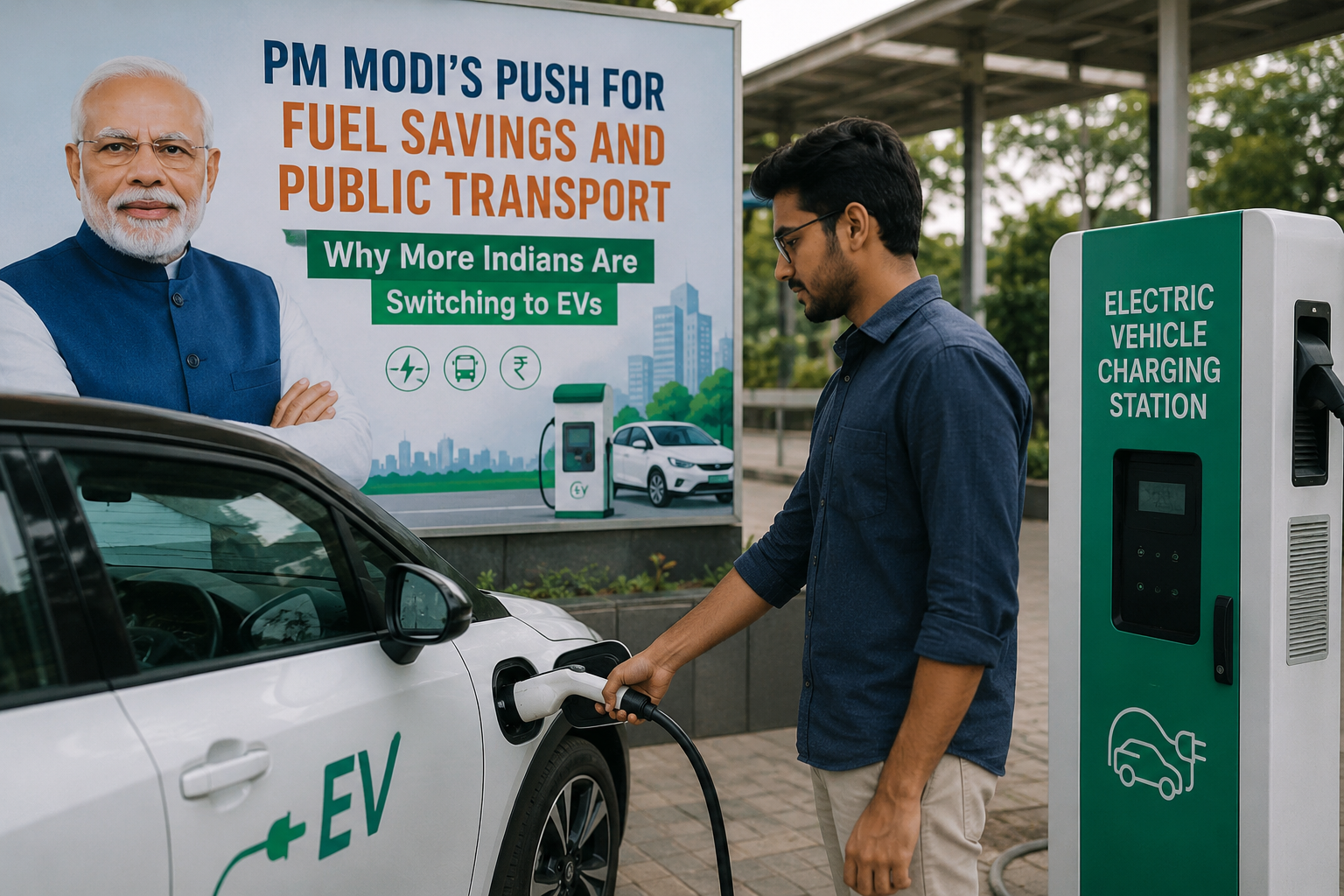
India’s roads are changing quietly, but very quickly. A few years ago, electric vehicles were still something people looked at with hesitation. Many believed EVs were expensive, difficult to maintain, and not practical for daily life. Petrol and diesel vehicles still felt like the safer option for most families.
Today, that mindset is slowly changing.
Electric vehicles are becoming a normal part of everyday life across India. From apartment parking spaces and office campuses to highways and shopping malls, EVs are now far more visible than they were even a few years ago. What once felt like a future concept is now becoming a practical choice for regular commuting.
One of the biggest reasons behind this shift is the rising cost of fuel. Petrol and diesel prices continue to increase, and daily travel has become expensive for many working professionals and middle-class families. People are naturally looking for alternatives that can help them save money in the long run, and EVs are beginning to offer that balance between affordability and convenience.
Prime Minister Narendra Modi has also consistently focused on reducing India’s fuel dependency and promoting cleaner transportation. Over the last few years, government initiatives, subsidies, and investments in infrastructure have helped accelerate EV adoption across the country.
Understanding the EV Shift: Then vs Now
A few years ago, buying an electric vehicle still felt uncertain for many Indians. People worried about battery life, charging stations, servicing, and whether EVs could handle long-distance travel comfortably. Public charging infrastructure was limited, which made many buyers hesitant.
Today, the situation looks very different.
Modern EVs now offer better battery technology, improved driving range, and smarter features. Many electric vehicles can comfortably deliver between 300 and 500 kilometres on a single charge, making them practical even for longer drives.
Charging infrastructure has also expanded rapidly. Public charging stations are now available across highways, office buildings, residential communities, malls, and commercial areas. Reports suggest that India has already crossed more than 25,000 public charging stations, and the numbers continue to grow steadily every year.
Cities like Bangalore, Chennai, Hyderabad, Pune, and Delhi are becoming major EV hubs because people now have better access to charging infrastructure and stronger awareness about electric mobility.
Why More Indians Are Choosing EVs
For most people, the biggest factor is still cost savings.
A petrol car may cost around ₹8 to ₹10 per kilometre to run, while an electric vehicle may cost only ₹1 to ₹2 per kilometre depending on charging methods and electricity tariffs. For someone travelling 40 to 50 kilometres daily, the difference becomes noticeable very quickly.
Industry reports suggest that EV running costs can be nearly 70% lower compared to petrol vehicles. Along with fuel savings, electric vehicles also require less maintenance because they have fewer moving parts than traditional engines.
Many EV users also enjoy the smoother driving experience, lower noise levels, and convenience of charging vehicles either at home or at nearby charging stations.
Sell EV Cars in Bangalore Through a Growing EV Ecosystem
As more people shift towards electric mobility, the resale market is also growing steadily. Buyers today are much more informed and usually check battery health, warranty coverage, charging efficiency, and software performance before purchasing a used EV.
Because of this, dedicated EV platforms are becoming more important than traditional automobile marketplaces.
Platforms like EV.Sale are helping create a more organised and transparent experience for both buyers and sellers. People looking to Sell EV Cars in Bangalore are increasingly choosing EV-focused platforms because they attract genuine buyers who already understand electric mobility better.
The process to Sell EV Cars in Bangalore has become much easier today because buyers are actively searching for electric vehicles through dedicated EV marketplaces instead of depending only on general classified websites.
For many EV owners planning to upgrade their vehicle or switch to newer models, platforms that help users sell EV Cars in Bangalore are becoming an important part of the growing EV ecosystem.
Infrastructure Growth Is Building Confidence
One of the biggest concerns around EV adoption earlier was charging availability. Today, that concern is slowly reducing as charging networks continue expanding across India.
Private companies, automobile manufacturers, startups, and state governments are all investing heavily in EV infrastructure. Charging stations are becoming more common across highways, metro cities, shopping centres, office spaces, and residential communities.
Bangalore, in particular, has emerged as one of India’s leading EV cities. The city’s technology-driven culture and growing focus on sustainability have helped accelerate electric vehicle adoption across different income groups. This is also one reason why more owners now prefer to Sell EV Cars in Bangalore through focused EV marketplaces.
India’s EV Future Looks Promising
India still spends a massive amount on fuel imports every year. Electric mobility is now being seen as a long-term solution that can help reduce fuel dependency while also lowering pollution levels across major cities.
Government initiatives like FAME II have supported this transition through subsidies, tax benefits, and charging infrastructure support. At the same time, automobile manufacturers are investing heavily in battery technology and newer EV models.
Industry experts believe electric vehicles could contribute nearly 30% of private vehicle sales by 2030. What once looked like an alternative option is now steadily becoming mainstream transportation in India.
As the market continues growing, the demand for platforms that help users sell EV Cars in Bangalore is also expected to rise significantly over the next few years.
Sell EV Cars in Bangalore
India’s EV movement is no longer just about trends or future predictions. It is already becoming part of everyday life across cities and communities.
Rising fuel prices, improving charging infrastructure, government support, and growing environmental awareness are all encouraging more Indians to switch to electric vehicles. At the same time, platforms like EV.Sale are helping create a more reliable and transparent ecosystem for EV buyers and sellers.
For owners planning to upgrade or resell their vehicle, trusted marketplaces that help people sell EV Cars in Bangalore are becoming an important part of India’s evolving electric mobility journey.
As India continues moving towards cleaner and smarter transportation, electric vehicles are expected to become a regular part of everyday commuting for millions of people.
1. Why are more Indians switching to electric vehicles in 2026?
More Indians are choosing EVs because fuel prices continue to rise while electric vehicles offer much lower running costs. Improved charging infrastructure, government subsidies, and better battery technology have also made EVs more practical for daily commuting and long-distance travel.
2. How much money can I save by using an electric vehicle instead of a petrol car?
An electric vehicle may cost only ₹1 to ₹2 per kilometre to run, while petrol cars can cost around ₹8 to ₹10 per kilometre. For daily commuters, this can lead to yearly savings of thousands of rupees on fuel and maintenance expenses.
3. Is it easy to sell EV Cars in Bangalore today?
Yes, selling an EV in Bangalore has become much easier because of dedicated EV marketplaces like EV.Sale. These platforms connect sellers with buyers who specifically understand electric vehicles, battery health, charging efficiency, and EV resale value.
4. Are electric vehicles good for long-distance travel in India?
Modern EVs are now much more reliable for long-distance travel compared to earlier models. Many electric cars offer ranges between 300 and 500 kilometres on a single charge, and India’s growing charging network is making highway travel more convenient.
5. What is the future of electric vehicles in India?
India’s EV market is expected to grow rapidly over the next decade. Government support, stronger charging infrastructure, better battery technology, and rising fuel costs are likely to make electric vehicles a major part of India’s transportation system by 2030.
Leave a Reply