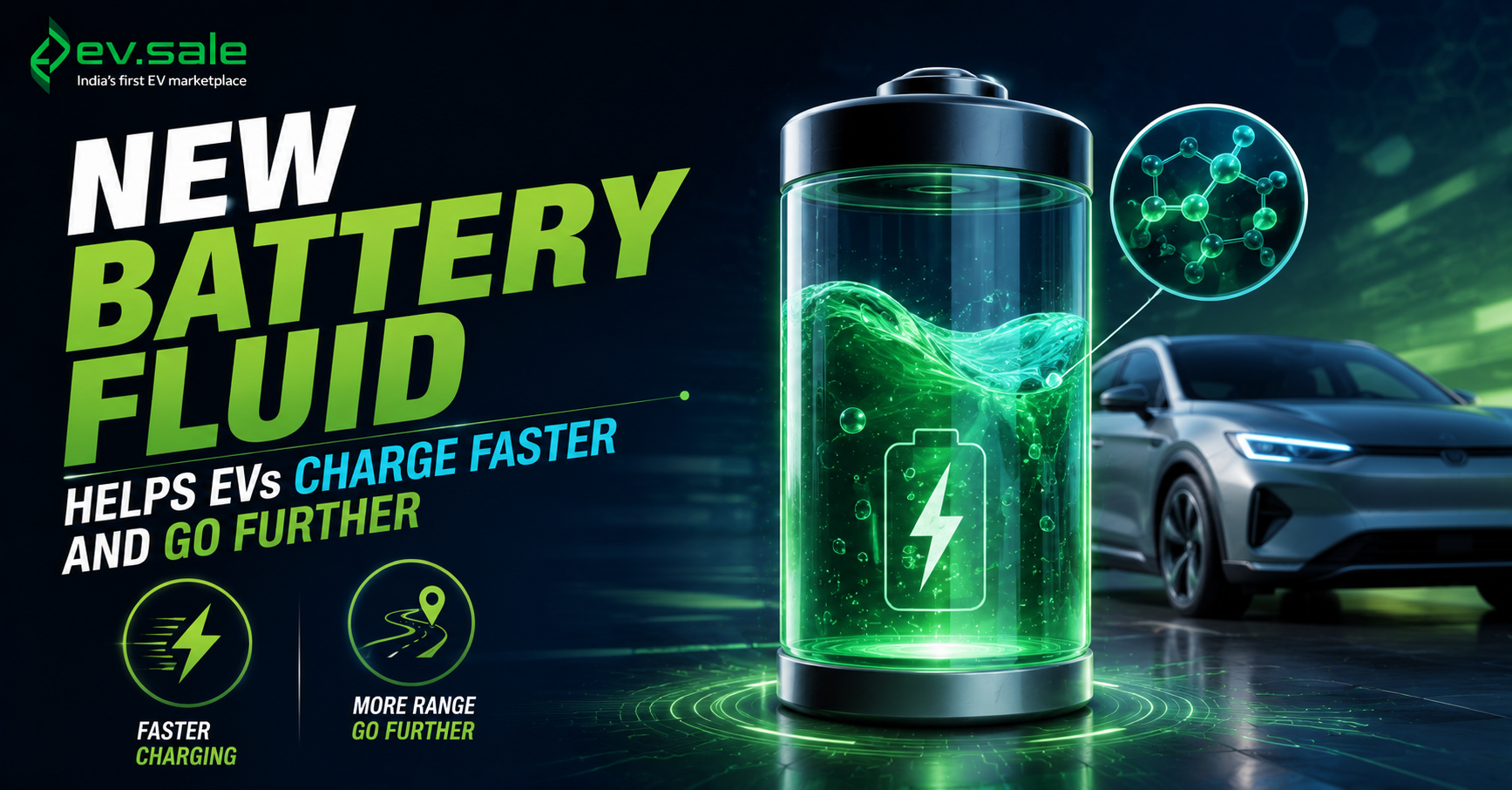
EV.sale is now tracking one of the most exciting developments in battery technology as researchers and automotive companies explore advanced battery cooling fluids that could dramatically improve charging speed, battery efficiency, and vehicle range. While most EV headlines focus on larger battery packs or faster chargers, experts believe thermal management may become the next major battleground in electric mobility. In simple terms, the cooler an EV battery remains during charging and driving, the better it performs. This new generation of battery fluids could allow electric vehicles to charge faster, travel further, and maintain battery health for longer periods of time.
For years, battery heat has quietly been one of the biggest limitations in electric mobility. Every time an EV accelerates aggressively or uses a fast charger, temperatures inside the battery pack rise significantly. Once temperatures increase beyond optimal operating conditions, charging speeds reduce automatically to protect the battery cells from damage. This is why many EV owners notice that charging speeds slow down once the battery reaches around 60 to 70 percent capacity.
The new battery fluid technology aims to solve exactly this problem.
Unlike traditional cooling systems that circulate coolant through pipes around the battery pack, advanced dielectric fluids can flow much closer to the cells themselves while remaining electrically safe. This allows heat to be absorbed and dissipated much more efficiently, maintaining stable temperatures even during high-speed charging sessions.
For EV.sale, developments like these demonstrate how the future of electric mobility will not only be defined by larger batteries but also by smarter engineering solutions.
The EV Industry Has Already Changed Faster Than Anyone Expected
The progress made by battery technology over the last fifteen years has been remarkable. In 2010, lithium-ion battery prices averaged more than $1,100 per kWh globally. At those prices, building affordable electric vehicles was nearly impossible. By 2020, battery costs had fallen to approximately $137 per kWh, helping manufacturers launch longer-range vehicles at lower prices. Today, in 2026, industry estimates place average battery costs between $100 and $130 per kWh depending on chemistry and manufacturing scale.
Range improvements have followed a similar trend.
Electric cars launched in the early 2010s often struggled to exceed 150 kilometres on a single charge. By comparison, mainstream electric vehicles in 2026 regularly offer between 400 and 600 kilometres of range, while premium EVs are approaching the 700-kilometre mark.
If advanced thermal fluids become commercially successful, experts believe the next generation of EVs could comfortably exceed 800 kilometres of range while reducing charging times significantly.
EV.sale continues helping buyers understand how these technological improvements directly affect ownership costs, resale values, and long-term usability.
Faster Charging Could Remove the Final Barrier to EV Adoption
For many years, range anxiety dominated conversations around electric vehicles. Ironically, most modern EVs already offer more than enough range for daily driving requirements. Studies suggest that the average private vehicle in India travels less than 40 kilometres per day, while most new EVs can comfortably cover ten times that distance.
The real challenge today is charging time.
Petrol vehicles can be refuelled in under five minutes. Even the fastest EV charging systems currently require between 15 and 30 minutes under ideal conditions. If advanced battery fluids can reduce charging times by 20 to 30 percent, a charging stop that currently takes 25 minutes could potentially fall to under 18 minutes.
Across millions of vehicles and thousands of charging stations, these savings could transform the economics of EV infrastructure while making long-distance electric travel more convenient than ever before.
For EV.sale, these developments highlight why battery technology remains the single most important factor influencing the future of mobility.
Best EV Marketplace in India Supporting the Future of Battery Innovation
Electric mobility today is no longer simply about purchasing a vehicle. Battery chemistry, thermal management, charging compatibility, software ecosystems, and ownership economics now influence buying decisions as much as design or performance.
Traditional automotive platforms were never designed around these EV-specific requirements.
EV.sale was.
Customers searching for the Best EV Marketplace in India increasingly rely on EV.sale to understand battery technologies, compare ownership costs, evaluate charging infrastructure, and follow the innovations shaping tomorrow’s vehicles.
Whether customers are researching advanced battery fluids or comparing premium electric SUVs, EV.sale provides a dedicated electric mobility ecosystem built entirely around the future of transportation.
As new technologies continue entering the market, EV.sale will continue strengthening its position as the Best EV Marketplace in India by simplifying complex EV technologies for everyday buyers.
How EV.sale Helps Owners List Their Electric Vehicles
The rapid pace of battery innovation is creating one of India’s fastest-growing used EV markets. As new models arrive with better efficiency, faster charging, and longer range, many owners are upgrading sooner than traditional vehicle buyers.
EV.sale simplifies the listing process by allowing owners to upload photographs, enter specifications, add battery information, include ownership history, and publish listings within minutes.
Unlike conventional automobile websites, EV.sale highlights battery health reports, charging compatibility, service records, and real-world range information that matter most to EV buyers.
This helps sellers connect directly with EV-focused customers while giving buyers the information they need to make informed decisions.
Many owners prefer listing their vehicles through EV.sale because the platform understands electric mobility better than traditional automotive marketplaces.
Buy Used EV Cars in Bangalore Through EV.sale
Bangalore continues leading India’s EV transformation because of strong charging infrastructure, technology-focused consumers, and increasing environmental awareness. Customers looking to Buy Used EV Cars in Bangalore require more than simple specifications and pricing information. Battery condition, charging history, software updates, and ownership costs all influence purchase decisions.
This is where EV.sale becomes different.
EV.sale helps customers evaluate vehicles based on battery health, charging compatibility, ownership history, and daily driving requirements rather than simply mileage and model year.
Whether customers want affordable city EVs, premium electric SUVs, family vehicles, or commercial fleets, EV.sale provides a marketplace designed entirely around electric mobility.
The increasing number of users choosing to Buy Used EV Cars in Bangalore through EV.sale reflects the growing demand for specialised EV marketplaces that understand the unique requirements of electric vehicle ownership.
The Future Could Be Cooler, Faster, and Smarter
Industry analysts expect the next decade of electric mobility to be defined by breakthroughs in battery chemistry, solid-state technology, charging infrastructure, and thermal management systems. Advanced battery fluids may appear to be a small engineering improvement, but history shows that small improvements often unlock the biggest transformations.
A vehicle that charges faster, travels further, and maintains battery health for longer periods solves many of the concerns that still exist around EV ownership today.
For EV.sale, this technology represents another important milestone in the journey towards cleaner, smarter, and more efficient transportation.
Continue exploring the future of electric mobility with our next feature:
“Keeway Hypevolt-R Electric Scooter Launched at ₹1.99 Lakh“
What is battery cooling fluid in an electric vehicle?
Battery cooling fluid is a specialised liquid used to control battery temperature during charging and driving. Effective thermal management improves efficiency, charging speed, and long-term battery health.
Can advanced battery fluids increase EV driving range?
Yes. Better temperature control reduces energy losses caused by excessive heat and allows battery cells to operate more efficiently, potentially increasing usable driving range.
Will faster charging damage EV batteries?
Modern battery management systems are designed to protect batteries during fast charging. Improved cooling technologies further reduce stress and improve battery lifespan.
How can I list my EV on EV.sale?
Vehicle owners can create listings by uploading photographs, entering specifications, adding battery details, and sharing ownership history through EV.sale.
Why are more buyers choosing EV.sale?
EV.sale focuses exclusively on electric mobility and provides battery insights, charging guidance, ownership education, market intelligence, and EV-focused buying and selling support designed specifically for electric vehicle customers.
Leave a Reply