Haryana’s Bold EV Policy Could Accelerate India’s Electric Mobility Revolution
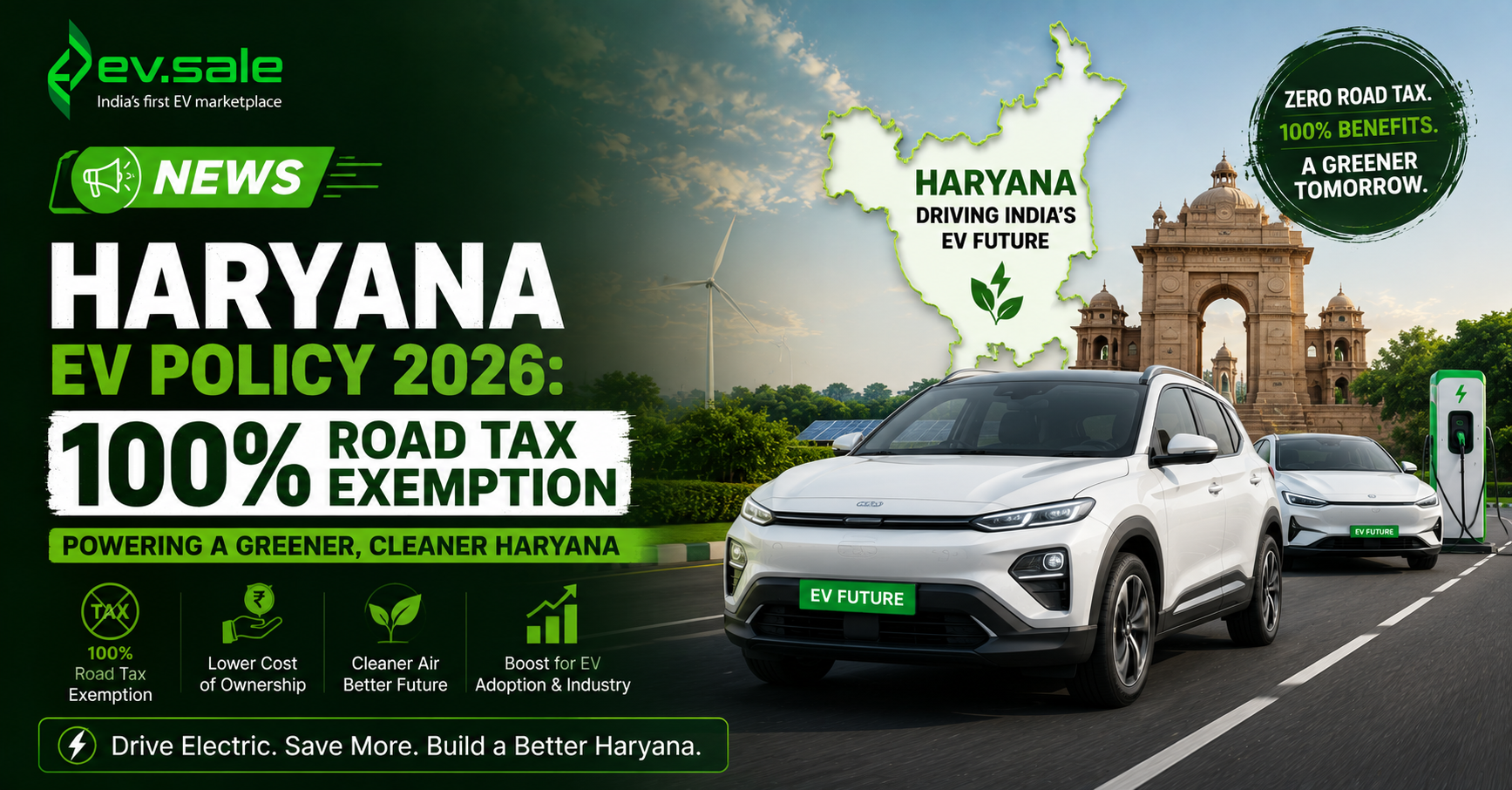
India’s transition towards electric mobility has received another significant boost with the introduction of the Haryana EV Policy 2026, a policy designed to make electric vehicles more affordable and encourage faster adoption across the state. The biggest highlight of the announcement is the 100% road tax exemption for eligible electric vehicles, a move that directly reduces the upfront cost of purchasing an EV. At a time when more Indians are seriously considering electric mobility as an alternative to conventional petrol and diesel vehicles, this policy sends a strong message that state governments are willing to play an active role in supporting sustainable transportation.
The timing of this announcement is particularly important. Just a few years ago, electric vehicles accounted for only a small fraction of India’s automobile market. Today, the landscape has changed dramatically. Annual EV registrations have increased from fewer than 1.5 lakh units in 2020 to more than 2 million units across various segments in 2025, making India one of the world’s fastest-growing electric mobility markets. Falling battery prices, improved vehicle technology, stronger charging infrastructure and government incentives have collectively transformed consumer confidence, encouraging thousands of first-time buyers to make the switch to electric mobility.
The reduction in battery costs has been one of the industry’s biggest success stories. In 2010, lithium-ion battery packs cost nearly USD 1,100 per kilowatt-hour, making electric vehicles far too expensive for the average consumer. Today, those costs have fallen to nearly USD 100–120 per kilowatt-hour, allowing manufacturers to introduce electric vehicles across multiple price segments. Haryana’s decision to eliminate road tax builds on this momentum by making EV ownership even more affordable, bringing the country one step closer to its long-term vision of cleaner and greener transportation.
Haryana EV Policy 2026 Makes Switching to an Electric Vehicle Financially Rewarding
One of the biggest concerns for prospective EV buyers has always been the higher purchase price compared with conventional petrol or diesel vehicles. While electric vehicles offer significantly lower running costs and reduced maintenance expenses over time, many customers hesitate because of the initial investment. Haryana’s latest policy directly addresses this concern by offering 100% road tax exemption, reducing the overall purchase cost and making electric vehicles considerably more attractive to everyday buyers.
Road tax forms an important component of the total on-road price of any vehicle. Eliminating this expense means customers can save thousands of rupees immediately while continuing to benefit from lower electricity costs, reduced servicing requirements and minimal maintenance throughout the vehicle’s ownership period. For many families, this combination of immediate and long-term savings could become the deciding factor when choosing between a conventional vehicle and an electric alternative.
The policy also creates confidence for manufacturers and investors. As demand for electric vehicles grows, automobile companies are expected to expand production facilities, strengthen local supply chains and invest more aggressively in battery technology and component manufacturing. According to industry estimates, India’s EV ecosystem is expected to attract over ₹1 lakh crore in investments over the next few years, generating employment opportunities while strengthening the country’s position as a global electric mobility manufacturing hub.
Government agencies and industry experts believe that supportive policies like Haryana’s will help India achieve ambitious EV adoption targets. By 2030, electric vehicles are expected to account for nearly 30% of private passenger vehicle sales, while electric two-wheelers and commercial vehicles are projected to witness even higher levels of adoption. Haryana’s proactive approach demonstrates how state governments can accelerate this transition through practical financial incentives that directly benefit consumers.
The Best EV Marketplace in India Is Becoming More Important as Electric Vehicle Choices Continue to Expand
India’s electric vehicle market is evolving at an extraordinary pace. Consumers who once had only a handful of electric vehicle options can now choose from dozens of electric cars, scooters, motorcycles and commercial vehicles across multiple price segments. While this growing competition is encouraging innovation, it also makes purchasing decisions considerably more complex. Buyers today compare battery technology, charging compatibility, warranty coverage, ownership costs and resale value before making an investment. This changing behaviour has significantly increased the importance of the Best EV Marketplace in India.
The Haryana EV Policy 2026 is expected to encourage thousands of new customers to enter the EV ecosystem over the coming months. Every new policy announcement strengthens market confidence, encourages manufacturers to launch additional products and increases investments in charging infrastructure and battery technology. Industry reports suggest that India’s electric vehicle market could exceed USD 150 billion by 2030, supported by strong government backing and continuous improvements in technology.
As the number of available electric vehicles continues to grow, buyers increasingly need access to transparent and reliable information before making their decision. The Best EV Marketplace in India has therefore become an essential resource where customers can compare electric vehicles based on battery health, ownership costs, service history, charging compatibility and long-term value rather than simply focusing on the purchase price. This shift reflects the growing maturity of India’s EV market, where informed decision-making is becoming just as important as affordability.
Policy Support, Technology and Infrastructure Are Transforming India’s EV Landscape
The rapid growth of India’s electric vehicle industry has not happened overnight. It is the result of consistent efforts from governments, manufacturers and technology companies working together to build a stronger electric mobility ecosystem. Programmes such as FAME, Production Linked Incentive (PLI) schemes and state-level EV policies have encouraged manufacturers to invest billions of rupees in local production while promoting innovation across battery technology, charging infrastructure and vehicle development.
India currently has more than 30,000 public charging stations either operational or under development, with thousands more expected to become operational over the next few years. Domestic battery manufacturing capacity is also expanding rapidly, helping reduce import dependence while improving affordability for Indian consumers. Several leading automobile manufacturers have announced large-scale investments in electric vehicle production, reflecting their confidence that India will become one of the world’s largest EV markets during the coming decade.
The Haryana EV Policy 2026 strengthens this national momentum by making electric vehicle ownership even more attractive for consumers. By reducing purchase costs and encouraging wider adoption, the policy contributes to a future where electric mobility becomes a practical choice for households across urban and rural India alike.
The Growing EV Ecosystem Is Encouraging More Buyers to Buy Used EV Cars in Bangalore
The impact of progressive EV policies extends far beyond the sale of new vehicles. Every electric vehicle purchased today eventually becomes part of the used EV market, making advanced electric mobility accessible to a much larger section of the population. As battery technology continues to improve and customer confidence grows, the demand for certified pre-owned electric vehicles is increasing steadily across the country.
Bengaluru has emerged as one of India’s strongest electric mobility markets because of its advanced charging infrastructure, technology-focused population and strong environmental awareness. These advantages have encouraged an increasing number of consumers to Buy Used EV Cars in Bangalore, recognising that modern electric vehicles provide excellent long-term reliability, lower maintenance costs and significantly reduced operating expenses compared with conventional fuel-powered vehicles.
EV.sale Is Helping Build a Trusted Marketplace for India’s Electric Vehicle Community
As India’s EV ecosystem continues expanding, customers require a marketplace that understands the unique requirements of electric vehicle ownership. Unlike conventional automobiles, EV buyers pay close attention to battery health, charging compatibility, warranty coverage and service history before making a purchase. Recognising these changing expectations, EV.sale has created a dedicated marketplace focused entirely on electric vehicles.
Whether someone is planning to purchase a brand-new EV under the Haryana EV Policy or wants to Buy Used EV Cars in Bangalore, EV.sale provides verified listings that include battery health reports, ownership records, warranty details, charging history and complete service documentation. This level of transparency enables buyers to make informed decisions while reducing uncertainty throughout the purchasing process.
Listing a vehicle on EV.sale is equally simple. Owners can create an account, upload high-quality photographs along with battery health reports, ownership documents, charging history, warranty information and service records before publishing their listing. A detailed and verified profile builds buyer confidence while improving the likelihood of connecting with genuine EV enthusiasts. As India’s electric mobility revolution continues gaining momentum, EV.sale is becoming an essential platform connecting buyers and sellers across the country’s rapidly expanding electric vehicle market.
Continue Reading on EV.sale
Next Blog: Avore EX Electric Bikes Launched in India: Price & Specs
The Best EV Marketplace in India Will Play a Bigger Role as More States Introduce Progressive EV Policies
The Haryana EV Policy 2026 is likely to create an impact that extends well beyond the state’s borders. Over the last few years, India’s electric vehicle ecosystem has grown because several state governments have introduced policies that reduce ownership costs, encourage investments and improve charging infrastructure. Delhi, Gujarat, Maharashtra, Karnataka and Tamil Nadu have already demonstrated how policy-driven incentives can accelerate EV adoption, and Haryana’s latest decision is expected to strengthen this nationwide momentum.
The automobile industry closely watches such policy announcements because they influence consumer behaviour, manufacturing strategies and investment decisions. Whenever the cost of owning an electric vehicle comes down through incentives such as road tax exemptions, buyers become more confident about switching from conventional vehicles. This increase in demand encourages manufacturers to launch more affordable models while motivating battery companies, charging infrastructure providers and component suppliers to expand their operations. According to industry projections, India’s electric mobility sector is expected to attract investments exceeding ₹1.5 lakh crore by 2030, with annual EV production potentially crossing 10 million vehicles across two-wheelers, passenger cars and commercial fleets.
As the market becomes more competitive, buyers are no longer looking only at purchase prices. They compare battery efficiency, charging speed, software updates, warranty coverage, maintenance expenses and long-term resale value before making a decision. This growing awareness has significantly increased the importance of the Best EV Marketplace in India, where customers can evaluate multiple electric vehicles using verified information instead of relying solely on advertisements or dealership claims. As India’s EV ecosystem continues expanding, the Best EV Marketplace in India will become an essential destination for informed buyers seeking transparency throughout their purchasing journey.
The Rise of Pre-Owned EVs Is Encouraging More Families to Buy Used EV Cars in Bangalore
One of the clearest signs that India’s EV industry is maturing is the rapid growth of its pre-owned electric vehicle market. A few years ago, many buyers were hesitant to consider used EVs because they were uncertain about battery health and long-term reliability. Today, those concerns are gradually disappearing. Improvements in battery technology, intelligent Battery Management Systems and longer manufacturer warranties have transformed customer confidence, making pre-owned electric vehicles an increasingly attractive option.
Bengaluru has naturally become one of India’s strongest markets for used electric vehicles. The city’s well-developed charging infrastructure, technology-driven population and strong environmental awareness have created an ideal ecosystem for electric mobility. As more customers recognise the financial benefits of electric ownership, they are choosing to Buy Used EV Cars in Bangalore rather than investing in conventional petrol or diesel vehicles.
Battery technology has evolved remarkably over the past decade. Modern lithium-ion battery packs are designed to deliver dependable performance for many years, with most leading manufacturers offering warranties of up to eight years or 1,60,000 kilometres. Independent research has shown that well-maintained EV batteries frequently retain more than 80% of their original capacity even after several years of regular use. These technological advancements have removed many of the concerns surrounding used EV ownership and encouraged thousands of customers to Buy Used EV Cars in Bangalore, where they can enjoy premium electric mobility at a much more affordable price.
EV.sale Is Building a Trusted Digital Home for India’s Growing EV Community
As electric mobility becomes increasingly mainstream, buyers expect much more than basic vehicle specifications. Unlike conventional automobiles, electric vehicles require customers to understand battery condition, charging history, warranty coverage, software updates and service records before making a purchase. General automobile marketplaces often fail to provide this level of specialised information, making it difficult for buyers to compare vehicles with confidence.
This is where EV.sale is creating a meaningful difference. Designed exclusively for electric vehicles, EV.sale provides a dedicated marketplace that focuses entirely on the unique requirements of EV ownership. Whether someone wants to purchase an affordable electric hatchback, explore premium electric SUVs or Buy Used EV Cars in Bangalore, EV.sale offers comprehensive listings that include battery health reports, charging compatibility, ownership records, warranty information and verified service history. This transparency allows buyers to evaluate vehicles more confidently while reducing uncertainty during the purchasing process.
Selling an electric vehicle through EV.sale has also been designed to be simple and transparent. Owners can register on the platform, upload clear photographs and include important documents such as battery health reports, charging history, ownership certificates, warranty information and complete service records. These verified details build buyer confidence and significantly improve the chances of receiving genuine enquiries from customers who are actively looking for electric vehicles. As India’s EV industry continues to grow, EV.sale is steadily establishing itself as one of the country’s most trusted digital marketplaces dedicated exclusively to electric mobility.
Haryana’s EV Policy Reflects the Direction India’s Automotive Industry Is Heading
The Haryana EV Policy 2026 is far more than a financial incentive for vehicle buyers. It reflects the broader transformation taking place across India’s automotive industry, where sustainability, technology and affordability are becoming central priorities. Only a decade ago, electric vehicles were viewed as expensive alternatives with limited practicality. Today, continuous improvements in battery technology, falling manufacturing costs and supportive government policies have completely changed that perception.
The future looks even more promising. Industry experts expect battery prices to continue declining over the coming years as domestic manufacturing expands and production volumes increase. Emerging technologies such as solid-state batteries promise faster charging, higher energy density and longer driving ranges, while artificial intelligence and connected vehicle technologies will make electric vehicles smarter and more efficient than ever before. Charging infrastructure is also expected to expand rapidly beyond metropolitan cities into Tier-2 and Tier-3 regions, making electric mobility accessible to millions of additional consumers.
Policies like Haryana’s will play an important role in accelerating this transition by reducing ownership costs and encouraging greater consumer confidence. Combined with specialised digital platforms such as EV.sale that simplify buying and selling, India is entering one of the most exciting phases of its electric mobility journey. The country is no longer simply adopting electric vehicles—it is building a complete ecosystem that will define the future of transportation for decades to come.
What is the Haryana EV Policy 2026?
The Haryana EV Policy 2026 is the state’s latest initiative to encourage electric vehicle adoption through incentives such as 100% road tax exemption for eligible EVs. The policy is designed to reduce ownership costs, support clean mobility and attract investments into the state’s electric vehicle ecosystem.
Which vehicles are eligible for the 100% road tax exemption?
Eligible electric vehicles covered under the Haryana EV Policy 2026 can benefit from the complete road tax exemption, subject to the government’s notified conditions. The initiative is expected to encourage wider adoption across passenger vehicles, two-wheelers and other eligible EV categories.
Why are more people choosing to Buy Used EV Cars in Bangalore?
Bengaluru has one of India’s most developed EV ecosystems, supported by widespread charging infrastructure, increasing environmental awareness and a growing supply of certified pre-owned electric vehicles. These advantages make the city an attractive destination for affordable electric mobility.
How can I list my electric vehicle on EV.sale?
Visit EV.sale, create your seller account and upload clear vehicle photographs along with battery health reports, ownership documents, charging history, warranty information and service records. A detailed listing helps buyers make informed decisions and improves the chances of a successful sale.
Why should EV buyers choose EV.sale?
EV.sale is a marketplace built exclusively for electric vehicles, providing specialised information such as battery health, charging compatibility, ownership history and warranty coverage. This dedicated approach offers greater transparency than general automobile platforms and helps buyers purchase with confidence.
Leave a Reply