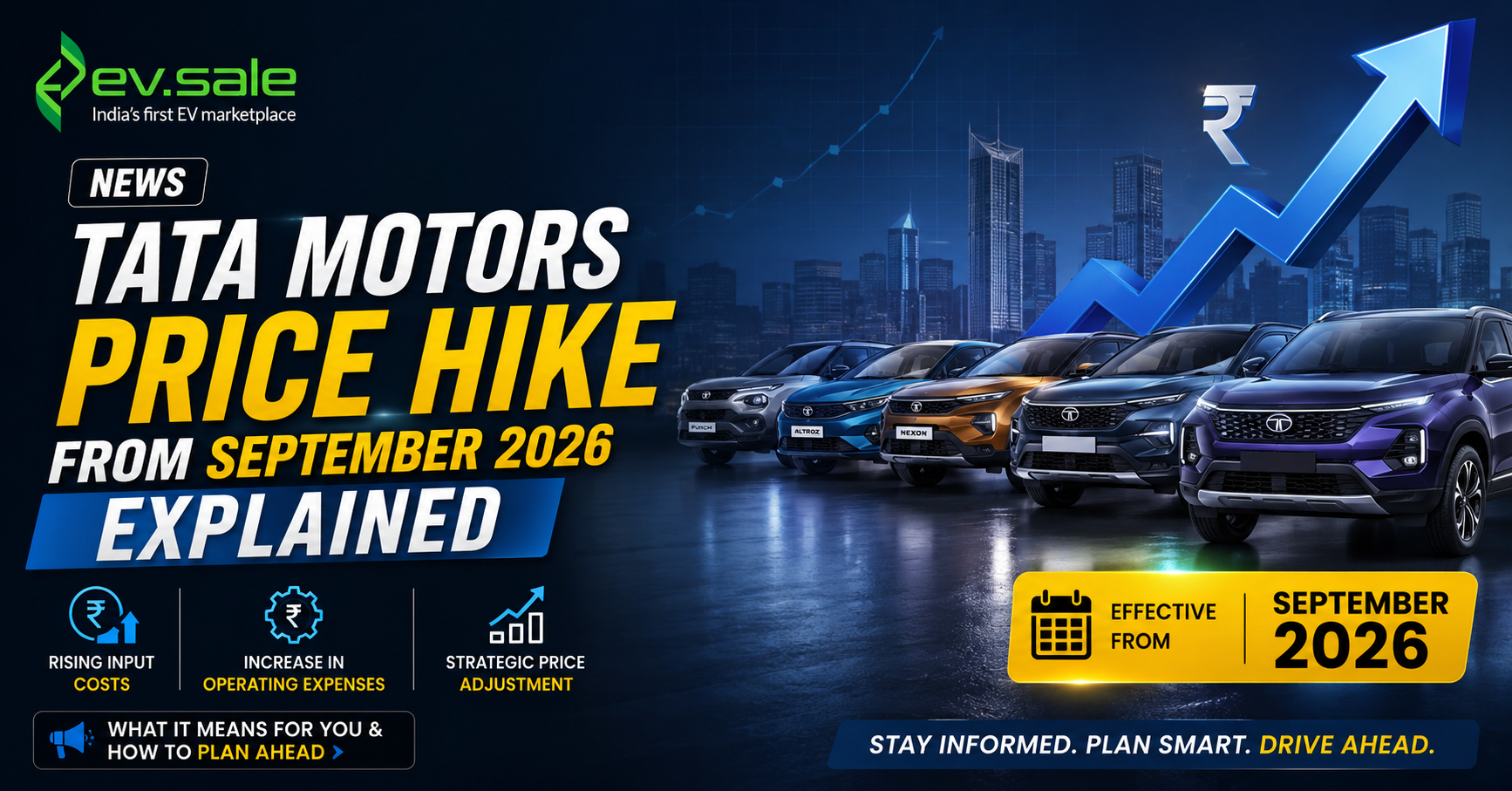
Tata Motors Announces Another Price Revision
Tata Motors is set to increase the prices of its passenger vehicles from September 1, 2026, with the hike going up to ₹25,000, depending on the model and variant. The revision will cover both conventional petrol and diesel vehicles as well as Tata’s electric vehicle range. The company has linked the increase to rising input costs and continued inflationary pressures. For buyers planning a Tata car during the upcoming festive season, the announcement makes the timing of their purchase more important. Rather than applying a flat increase across the portfolio, Tata Motors will adjust prices differently across individual models and variants.
Why Are Tata Motors Prices Increasing?
The automobile industry continues to face pressure from higher raw-material and manufacturing costs, making regular price revisions increasingly common. Tata Motors has indicated that rising commodity prices and inflation have affected its overall cost structure. The company has also been absorbing part of the additional costs instead of transferring the entire burden to customers. This approach has allowed the manufacturer to limit the latest increase to a maximum of ₹25,000. For buyers, however, even a relatively small price change can influence financing requirements and the final on-road cost.

Third Tata Passenger Vehicle Price Revision in 2026
The September increase becomes more significant when viewed alongside Tata Motors’ earlier price revisions this year. The company implemented a weighted average increase of around 0.5% from April 1, 2026, followed by another increase of up to 1.5% from July 1, 2026. The upcoming September revision will therefore be the third passenger-vehicle price adjustment announced by Tata Motors in 2026. This sequence reflects the broader challenge manufacturers face in balancing rising costs with consumer affordability.
What Does the September Hike Mean for Tata EVs?
Tata Motors’ electric vehicles will also be part of the September price revision, making the announcement relevant for customers considering models from its EV portfolio. However, buyers should not assume that every Tata EV will become ₹25,000 more expensive. The company is expected to apply different increases depending on the vehicle and variant. Customers who are already considering a Tata EV should therefore check the revised ex-showroom and on-road prices for their preferred version before making a booking or final purchase decision.
Tata’s EV Portfolio Faces a Changing Market
Tata Motors has established a strong presence in India’s passenger EV market, with electric models catering to different price points and customer requirements. The company has helped make electric cars more accessible to mainstream Indian buyers while continuing to expand its EV portfolio. As competition increases, consumers now have more choices from both established manufacturers and newer EV brands. This means Tata Motors must balance price increases with range, technology, features, charging capability and overall value.
Best EV Marketplace in India as New-Car Prices Change
Repeated new-car price revisions are also making the pre-owned EV market more relevant for buyers looking for better value. The Best EV Marketplace in India can help consumers compare used electric vehicles with the latest prices of new models. A pre-owned EV may offer similar technology at a lower entry price, particularly when the original vehicle has already experienced depreciation. However, buyers should consider battery condition, remaining warranty, service history and overall vehicle condition before deciding.
Tata EV Buyers Need to Look Beyond the Price Tag
The purchase price is only one part of the total cost of owning an electric vehicle. Buyers should also consider insurance, home-charging installation, public charging expenses, maintenance, tyres and future resale value. EVs generally have fewer moving mechanical components than petrol or diesel cars, but battery-related components remain important to long-term ownership. As Tata Motors revises its prices, comparing the complete ownership cost can help buyers determine whether a new EV or a well-maintained used EV offers better value.
Buy Used EV Cars in Bangalore as New Prices Move Higher
Customers who Buy Used EV Cars in Bangalore may find the changing new-car market increasingly attractive. Bengaluru has developed into one of India’s important EV markets, supported by strong consumer awareness, charging infrastructure and a growing number of electric vehicles on the road. As existing EV owners upgrade to newer models, more pre-owned electric cars are expected to enter the market. This could give buyers access to modern EV technology without paying the full price of a brand-new vehicle.
Buy Used EV Cars in Bangalore With Battery Health in Mind
Anyone planning to Buy Used EV Cars in Bangalore should pay close attention to battery health before completing a purchase. The number of kilometres on the odometer does not tell the entire story of an EV’s condition, because charging patterns and usage can also influence battery performance. Buyers should ask about battery-health reports, charging history, warranty coverage and service records. A professional inspection can further help assess the battery system, charging equipment, tyres, suspension and other important components.
EV.sale Helps Connect Used-EV Buyers and Sellers
As India’s electric vehicle population grows, a dedicated marketplace can make the process of buying and selling pre-owned EVs more convenient. EV.sale focuses specifically on electric vehicles, giving owners an opportunity to showcase their cars while helping interested buyers discover available listings. Customers planning to Buy Used EV Cars in Bangalore can explore EV options through EV.sale. The platform can also help sellers highlight EV-specific information that may not receive enough attention on conventional used-car platforms.
How to List Your EV on EV.sale
Creating a detailed listing can make a significant difference when selling a used electric vehicle. Owners can provide the exact model and variant, registration year, kilometres driven, ownership details and expected selling price. Clear photographs of the exterior, interior, dashboard and charging equipment can give potential buyers a better understanding of the vehicle’s condition. Sellers can also include battery details, warranty information, service records and charging history to make the listing more transparent and useful.
Best EV Marketplace in India for the Growing Used-EV Ecosystem
As India’s EV market matures, resale will become an increasingly important part of electric-vehicle ownership. The Best EV Marketplace in India can play a role in connecting owners who want to upgrade with buyers looking for more affordable EV options. Detailed listings can make it easier to compare vehicles based on age, mileage, battery condition and equipment. This growing resale ecosystem will also help EVs reach a wider group of consumers who may not initially be able to justify the cost of a brand-new electric car.
Tata Motors Price Hike Arrives Before the Festive Season
The September price increase comes just before India’s important festive buying period, traditionally one of the busiest times for automobile purchases. A maximum increase of ₹25,000 may appear relatively small compared with the price of a premium SUV, but it can be meaningful for buyers working with a strict budget. Financing customers may also see a slight change in their monthly repayment depending on the vehicle and loan structure. Buyers should therefore compare the final on-road price rather than focusing only on the headline ex-showroom increase.
Other Manufacturers Are Also Raising Prices
Tata Motors is not the only manufacturer dealing with rising cost pressures in 2026. Several major carmakers have announced price adjustments during the year as manufacturers attempt to manage commodity prices, production expenses and inflation. This broader trend suggests that vehicle prices may continue to experience periodic changes rather than remaining fixed for long periods. For consumers, this makes researching prices and comparing both new and used vehicles increasingly important before making a purchase.
What Could Happen to EV Prices in the Future?
The future of EV pricing is likely to be shaped by two opposing forces. Improvements in battery technology, manufacturing scale and supply-chain efficiency could gradually reduce production costs, while raw-material prices, logistics and inflation can push prices higher at different points. Compared with the early years of electric mobility, EV production has become considerably more mature and volumes have increased. However, prices are unlikely to move continuously downward because the automotive industry remains exposed to broader economic conditions.
Buy Used EV Cars in Bangalore for Greater Purchase Flexibility
For customers who Buy Used EV Cars in Bangalore, changing new-car prices can create opportunities in the pre-owned market. When a new model becomes more expensive, a properly maintained used version can become comparatively attractive. However, the actual value depends on depreciation, battery health, age, mileage, warranty and equipment. Buyers should compare the used vehicle against the latest version rather than assuming that every older EV automatically represents a bargain.
A Changing Cost Equation for Tata EV Buyers
Tata Motors’ latest price revision highlights how the cost of owning an EV is changing as the Indian market matures. Buyers now have more models to compare, but they also need to consider battery technology, charging infrastructure and long-term resale value. New-car prices may rise periodically while older EVs become more affordable through depreciation. This creates a wider range of choices for consumers, provided they carefully evaluate the condition and ownership costs of each vehicle.
The Future of Tata Motors’ Electric Vehicle Strategy
Tata Motors remains an important player in India’s passenger EV market, and its future growth will depend on maintaining the right balance between affordability, technology and profitability. As competition intensifies, customers will expect better range, improved charging, stronger features and competitive pricing. Regular price adjustments may help the company manage rising costs, but product value will remain crucial. The next few years could therefore be important for Tata Motors as India’s electric-car market moves from early adoption towards a more competitive mainstream phase.
Best EV Marketplace in India as EV Ownership Enters Its Next Phase
The Best EV Marketplace in India will become increasingly relevant as today’s new electric cars eventually move into the used-vehicle market. Buyers will need reliable information about battery health, warranty, charging history and vehicle condition, while sellers will need an effective platform to reach serious EV customers. A dedicated marketplace can bring these requirements together and make the resale process easier. As more Indians consider EV ownership, the relationship between new-car prices and used-EV values will become an important part of the market.
Buy Used EV Cars in Bangalore With a Long-Term Perspective
Customers who Buy Used EV Cars in Bangalore should look at the vehicle as a long-term ownership decision rather than simply searching for the lowest purchase price. Battery condition, remaining warranty, service history and charging capability can have a greater impact on ownership value than a small difference in the asking price. A slightly more expensive used EV with strong battery health and complete records could prove more economical over several years. Careful comparison can help buyers make the most of the growing pre-owned EV market.
What the September Price Hike Means for Buyers
The Tata Motors price hike from September 2026 demonstrates how quickly vehicle pricing can change in India’s competitive automobile market. With the increase capped at ₹25,000, the impact will vary depending on the model and variant selected. Buyers who have already shortlisted a Tata vehicle should check the applicable price before and after September 1 rather than assuming the maximum increase applies to their chosen model. For customers who are flexible, comparing new offers with used EV listings could reveal additional opportunities.
Tata’s September 2026 Price Hike Explained
Tata Motors’ upcoming price revision of up to ₹25,000 from September 1, 2026, reflects the continuing pressure from input costs and inflation across the automobile industry. The increase follows earlier price revisions in April and July, making it an important development for customers planning to purchase a Tata passenger vehicle or EV. The actual increase will depend on the model and variant, so buyers should verify the latest price before making a booking.
For consumers who are considering alternatives, the growing used-EV market offers another route into electric mobility. Customers looking to Buy Used EV Cars in Bangalore can explore dedicated listings on EV.sale and compare vehicles based on price, condition, battery health and ownership history.
Continue reading EV.sale – Genesis GV90 Unveiled: 657-HP Electric Luxury SUV
Leave a Reply