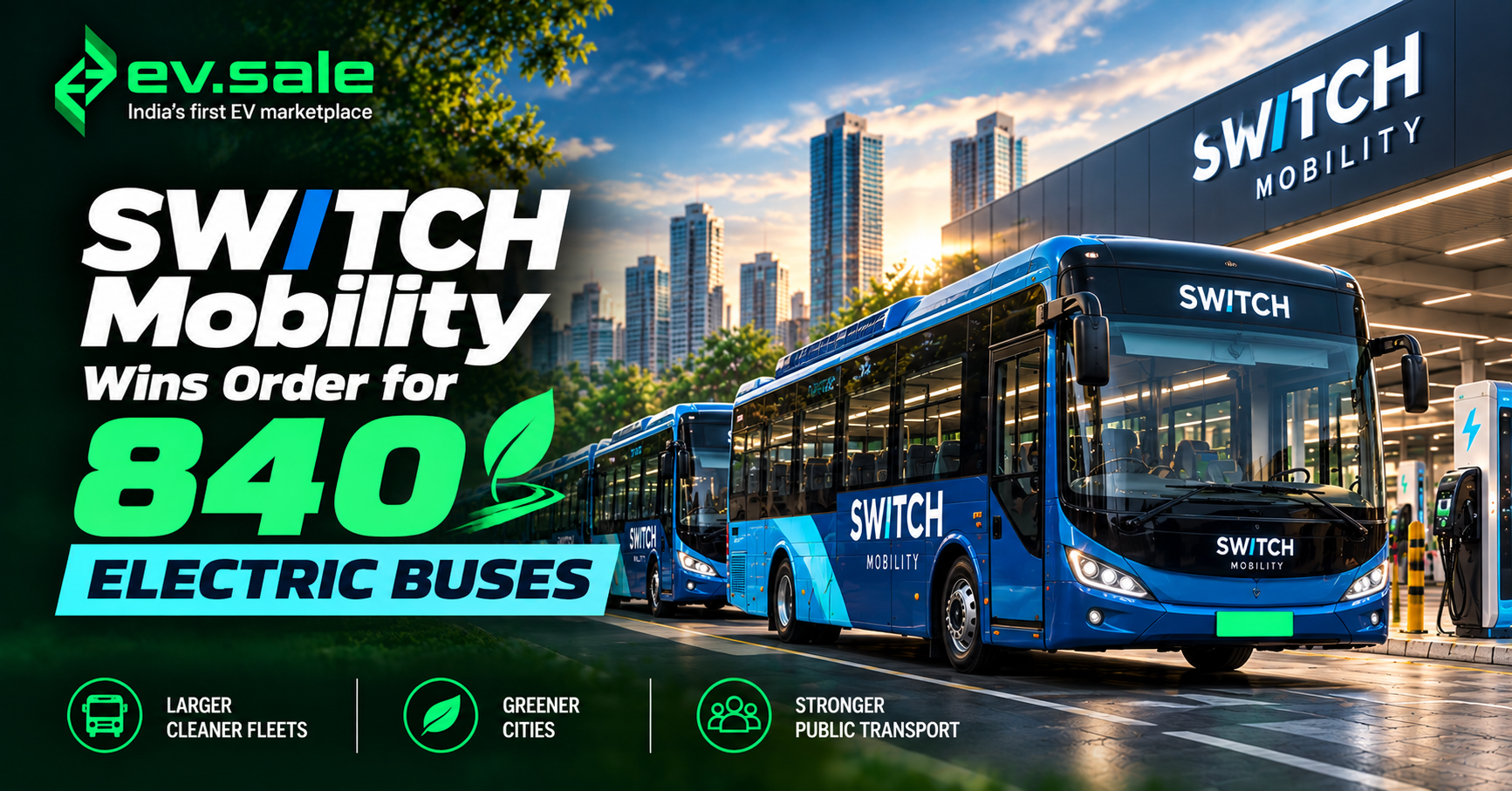
India’s electric mobility journey is gradually moving beyond private cars and two-wheelers, with public transportation emerging as an important part of the transition. In a significant development, SWITCH Mobility has secured an order for 840 electric buses from Antony Road Transport Solutions for deployment in Delhi under the PM E-Drive scheme. The order includes 420 nine-metre buses and 420 twelve-metre buses, giving the operator two vehicle formats for different passenger and route requirements. The development highlights how electric mobility is becoming increasingly relevant to large-scale transport operations, where running costs, vehicle reliability and environmental considerations influence purchasing decisions. It also creates another opportunity to examine how India’s wider EV ecosystem is evolving, from commercial fleets to the pre-owned electric vehicle market.
SWITCH Mobility Wins an Order for 840 Electric Buses in Delhi
The order announced in September 2026 represents a significant addition to SWITCH Mobility’s electric bus business in India. Antony Road Transport Solutions was selected as the operator under the CESL PM E-Drive Phase I tender, with the buses intended for deployment through Delhi’s public transport system. The order consists of an equal split between nine-metre and twelve-metre air-conditioned electric buses, allowing the operator to consider different passenger volumes and road conditions. SWITCH Mobility is part of the Hinduja Group and has established a presence in the commercial electric vehicle segment through its electric bus and mobility solutions. The exact contract value and complete delivery schedule have not been publicly confirmed in the reporting referenced for this article.
The significance of this announcement goes beyond the number of vehicles involved. Large public transport orders can encourage manufacturers to expand production capabilities, improve service networks and strengthen their relationships with fleet operators. For cities, electric buses offer a way to modernise transport while reducing direct exhaust emissions on the road. However, successful deployment requires more than the supply of vehicles; charging infrastructure, depot planning, maintenance support and route scheduling must work together. As India continues to expand electric mobility, developments such as this order are likely to influence how transport authorities assess future fleet investments.
Why Delhi’s Electric Bus Expansion Matters
Delhi’s public transport network serves commuters travelling to workplaces, educational institutions, commercial areas and residential neighbourhoods every day. Conventional diesel buses have long played a major role in meeting this demand, but they also produce tailpipe emissions and expose operators to fluctuations in fuel prices. Electric buses replace the conventional engine with an electric powertrain, which can reduce local exhaust pollution and offer potential savings on energy and maintenance. Their overall environmental benefit, however, also depends on the electricity used for charging, vehicle utilisation and the efficiency of the transport system. This makes careful planning essential when cities move from smaller electric bus deployments to larger fleets.
The 840-bus order also demonstrates why fleet electrification is increasingly being considered a long-term infrastructure investment. Public transport operators need vehicles that can complete daily schedules consistently, accommodate passengers comfortably and return to service quickly after charging or maintenance. Battery performance, charger availability, air-conditioning requirements and route distance all influence operational results. If these factors are managed effectively, electric buses can help cities build a more efficient transport network over time. The wider EV industry benefits when successful deployments generate practical experience, reliable performance data and greater confidence among businesses considering electric vehicles.
Nine-Metre vs Twelve-Metre Electric Buses: Understanding the Fleet Mix
The decision to procure two different bus lengths reflects the varied requirements of urban transportation. Nine-metre buses can be useful on routes where manoeuvrability and access through busy streets are important, while twelve-metre buses may be better suited to routes with higher passenger demand. Actual capacity depends on the vehicle’s seating layout, standing space and final configuration, so length alone does not determine how many passengers a bus can carry. By selecting 420 buses in each category, the operator has a balanced fleet mix that can be allocated according to route requirements. The final operating pattern will depend on transport planning, depot locations and the needs of the travelling public.
SWITCH Mobility’s electric bus technology is designed for commercial passenger transport, where vehicle availability and predictable performance matter as much as driving range. Electric powertrains can use regenerative braking to recover some energy during deceleration, while connected fleet systems can help operators monitor vehicle performance and maintenance requirements. Such technologies may improve planning when supported by trained staff and suitable operating procedures. Nevertheless, real-world efficiency varies with passenger load, traffic, temperature, air-conditioning use and charging practices. For operators evaluating a large purchase, performance under local conditions is more useful than relying on a single advertised range figure.
Electric Bus Costs: Purchase Price, Charging and Long-Term Savings
One question surrounding the new order is how much the 840 buses will cost. The total contract value has not been confirmed in the cited reports, so assigning a specific price to the order would be speculative. Electric bus prices can vary according to vehicle length, battery capacity, onboard equipment, warranty terms, charging arrangements and the service package included in a contract. In some procurement models, charging infrastructure and long-term maintenance are handled through separate arrangements, which can make headline contract comparisons difficult. A meaningful financial assessment must therefore consider the complete package rather than the vehicle price alone.
Over the operating life of a bus, electricity costs and maintenance requirements can influence the economics considerably. Diesel buses require regular fuel purchases and maintenance for combustion engines, while electric buses rely on charging systems, battery management and electric powertrain components. Electric vehicles generally have fewer moving powertrain parts, but battery health, replacement planning and charger reliability remain important financial considerations. Operators must also account for depot upgrades, staff training, downtime and the availability of technical support. The best comparison is the total cost of ownership over several years, measured against the distance travelled, passenger service delivered and reliability achieved.
India’s Electric Bus Market: Past Growth, Current Demand and Future Potential
India’s electric bus market is developing as public transport agencies and private operators look for alternatives to conventional diesel fleets. Industry reporting cited by Sustainable Bus indicated that India recorded 2,944 electric bus registrations during the first half of 2026, representing year-on-year growth of around 40%. SWITCH Mobility accounted for approximately 830 registrations during that period, equivalent to about 28% of the reported market. These figures suggest that electric buses are gaining traction, although registrations, procurement tenders, awarded orders and actual deliveries measure different stages of the market. They should not be combined as though they represent the same number of vehicles already operating on Indian roads.
Government-supported procurement programmes are another important part of the picture. The PM E-Drive scheme is intended to support eligible electric mobility initiatives, including electric bus deployment under applicable programme conditions. Large orders can give manufacturers greater visibility into future demand, while operators can plan fleet expansion around contract requirements and infrastructure readiness. However, the pace of adoption will depend on funding, vehicle production, charging capacity, electricity supply and the ability to keep buses available for daily service. Over the coming years, operational performance and financial sustainability will be just as important as the number of electric buses announced in new contracts.
Best EV Marketplace in India: How EV.sale Helps Buyers Discover Electric Vehicles
The expansion of commercial electric transport is part of a wider change in how people think about vehicle ownership. As electric mobility becomes more familiar, buyers increasingly look for information about running costs, charging requirements, battery performance and resale value. For consumers exploring the Best EV Marketplace in India, EV.sale provides a dedicated online destination for discovering electric vehicle listings. The platform connects vehicle sellers with potential buyers, helping users explore available options in one place. Visit EV.sale to discover the platform and its available listings.
Although electric buses and private electric cars serve different needs, both belong to the same expanding mobility ecosystem. People considering an EV purchase may compare new and pre-owned models, evaluate their daily travel requirements and check whether charging is practical at home or work. A marketplace can make vehicle discovery more convenient, but buyers should still conduct their own checks before completing a transaction. Vehicle documentation, service history, battery condition and warranty coverage deserve particular attention when purchasing a used electric vehicle. Choosing the Best EV Marketplace in India should therefore involve not only browsing listings but also understanding the information available and independently verifying important vehicle details.
Buy Used EV Cars in Bangalore: What Buyers Should Check Before Purchasing
Bengaluru’s traffic conditions and varied commuting distances make it important to choose an electric car according to actual daily travel needs. People planning to Buy Used EV Cars in Bangalore should begin by estimating their regular mileage and checking whether home, workplace or nearby public charging is accessible. A vehicle’s advertised range may differ from its real-world performance because of traffic, driving style, temperature and air-conditioning use. Battery health information, when available, can help buyers understand the battery’s present condition and make a more informed assessment. Buyers should also check the charging connector, supplied charging equipment and any remaining battery warranty.
Price should be only one part of the decision. Before choosing to Buy Used EV Cars in Bangalore, review the registration certificate, insurance, ownership history, service records and any outstanding finance or legal issues. Arrange an inspection and test drive, and ask the seller about repairs, accident history and battery-related concerns. It is also sensible to compare similar vehicles by age, kilometres driven, condition and available warranty rather than relying on the asking price alone. A careful evaluation can help buyers avoid unexpected expenses and select a vehicle that fits their budget and commuting requirements.
How to List an Electric Vehicle on EV.sale
Owners planning to sell an electric car can visit EV.sale and begin preparing a listing with accurate vehicle information. Include the make and model, registration year, kilometres driven, asking price and a clear description of the vehicle’s condition. Good-quality photographs help potential buyers understand the car’s exterior, interior and overall presentation before making an enquiry. Where available, include service records, battery health information, warranty details and charging accessories supplied with the vehicle. Complete and transparent listings can make it easier for interested buyers to assess whether a vehicle suits their requirements.
Once the listing is published, prospective buyers can discover the vehicle and contact the seller to ask questions or arrange further checks. Sellers should keep the information current, respond clearly to enquiries and be prepared to provide relevant documentation during the transaction. EV.sale offers an online space for connecting buyers and sellers, while the final vehicle inspection, verification and transaction arrangements remain important responsibilities for both parties. If you want to reach people searching for the Best EV Marketplace in India, presenting your vehicle honestly and providing useful details can improve the overall listing experience. For buyers seeking to Buy Used EV Cars in Bangalore, the same transparency makes it easier to compare options and identify vehicles worth inspecting.
Continue reading: NEWS – VinFast Expands to 34 Cities With 50+ E-Bike Dealers
The Future of Electric Mobility in India
The order for 840 electric buses highlights the growing role of electrification in public transport, but its long-term importance will depend on the buses entering service and delivering reliable results. Fleet operators will need to monitor energy consumption, charging time, battery performance, passenger usage and maintenance costs throughout the contract. Public authorities will also need to ensure that charging depots and route schedules are designed around the operational requirements of electric vehicles. As more data becomes available from large deployments, it should become easier to compare electric and diesel fleets on a consistent financial and operational basis.
The same shift is creating new opportunities across the wider vehicle market, including online discovery and pre-owned EV sales. Buyers who research carefully can compare vehicles based on their budget, range, charging access and condition instead of focusing only on the purchase price. Sellers, meanwhile, can use dedicated platforms to reach people already interested in electric mobility. EV.sale aims to support this growing ecosystem by connecting buyers and sellers through its online marketplace. Whether someone is following large commercial orders or looking to Buy Used EV Cars in Bangalore, reliable information and careful evaluation will remain essential as India’s electric vehicle market develops.
1. How many electric buses has SWITCH Mobility secured an order for?
SWITCH Mobility has secured an order for 840 electric buses from Antony Road Transport Solutions for deployment in Delhi. The order includes 420 nine-metre air-conditioned buses and 420 twelve-metre air-conditioned buses. The vehicles are intended for public transport operations under the PM E-Drive Phase I tender. The contract value and full delivery schedule have not been confirmed in the reporting cited here.
2. What is the PM E-Drive scheme, and how does it support electric buses?
PM E-Drive is a Government of India initiative designed to support eligible electric mobility programmes. It provides a policy framework for encouraging the adoption of electric vehicles in specified categories and applications. Electric bus procurement under applicable programmes can help public transport operators move towards cleaner fleets. Actual support and procurement conditions depend on the relevant scheme guidelines and tender requirements.
3. Are electric buses cheaper to operate than diesel buses?
Electric buses can offer lower energy and certain maintenance costs, but savings vary according to operating conditions. Electricity tariffs, route distance, passenger load, charging efficiency and battery life all influence the final cost. Operators must also consider charging infrastructure, depot upgrades and downtime. A total-cost-of-ownership assessment over the vehicle’s operating life gives a more useful comparison than the initial purchase price alone.
4. How can I sell my electric car through EV.sale?
Visit EV.sale to explore the platform and prepare your electric vehicle listing. Include accurate vehicle details, the asking price, clear photographs and information about service history or battery condition where available. Keep your documents ready and respond transparently to questions from interested buyers. Before completing a sale, verify the buyer and follow the necessary ownership-transfer and payment procedures.
5. What should I check before buying a used electric car in Bangalore?
Before deciding to Buy Used EV Cars in Bangalore, check the vehicle’s battery condition, real-world range, charging compatibility and remaining warranty. Review the registration certificate, insurance, service records and ownership history, and arrange an inspection and test drive. Compare similar cars by price, age, mileage and condition. Confirming these details before payment can help reduce the risk of unexpected repair costs.
Leave a Reply