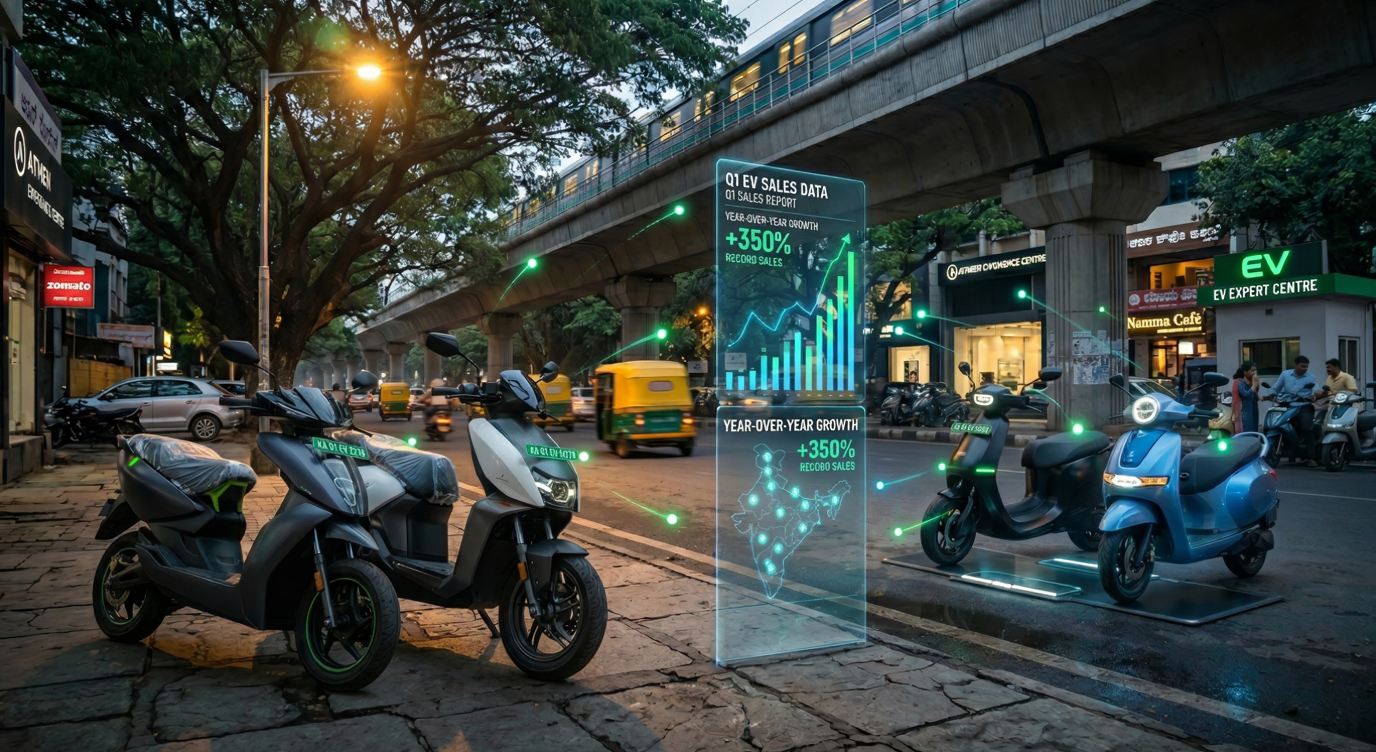
India’s electric mobility journey is no longer something we talk about as the future—it’s unfolding right now, and at a pace that few expected. As FY2027 begins, electric two-wheeler sales have taken off on a strong note, clearly signalling a deeper shift in how Indians commute. What started as a niche alternative is now steadily becoming a mainstream choice, especially across urban hubs like Bangalore, Chennai, and Delhi.
The numbers tell a compelling story. Between May 2025 and April 2026, India recorded more than 25 lakh EV sales, with electric two-wheelers leading the charge. Within this, the segment alone crossed 1.4 million units in FY2026, showing consistent demand growth and rising consumer confidence. This isn’t just a spike—it’s a pattern that has been building year after year.
A Market That Is Scaling Faster Than Expected
The beginning of FY2027 has only reinforced this momentum. In April 2026, electric two-wheeler sales reached around 1.48 lakh units, making it one of the strongest opening months on record. Even after a slight dip following March’s subsidy-driven surge, the overall trajectory continues to move upward.
If we look back, the growth becomes even more striking. From approximately 9.48 lakh units in FY2024 to over 1.14 million units in FY2025, and then crossing even higher levels in FY2026, the segment has shown steady year-on-year expansion. This kind of consistency is rare in emerging industries and highlights how quickly electric mobility is maturing.
Penetration is also gradually increasing. Electric two-wheelers now account for over 6.5% of the total two-wheeler market, up from around 6% the previous year. While the percentage may appear small at first glance, it represents millions of consumers making the switch from petrol to electric.
Why Consumers Are Moving Towards Electric
At the core of this shift is a simple equation—cost and convenience. A petrol scooter today typically costs around ₹2 to ₹2.5 per kilometre to run. In comparison, an electric scooter operates at just ₹0.25 to ₹0.40 per kilometre. For a daily commuter, this can translate into annual savings of ₹15,000 to ₹25,000, which is significant by any standard.
Upfront pricing is also becoming more accessible. Entry-level electric scooters now start at around ₹90,000, while premium models go up to ₹1.5 lakh. At the same time, battery performance has improved considerably, with real-world ranges between 100 km and 180 km per charge, making them practical for everyday use.
This is exactly why choosing the Best Electric two wheeler is becoming less about compromise and more about long-term value. Buyers today are not just comparing prices—they are evaluating efficiency, reliability, and overall ownership experience.
Strong Competition Driving Growth
Another major factor accelerating this growth is competition. Established manufacturers and new-age EV brands are both pushing hard to capture market share. Companies like TVS, Bajaj, and Ather are reporting impressive numbers, reflecting strong consumer demand.
TVS, for instance, recorded sales of over 37,000 units in April 2026, nearly doubling its performance compared to the previous year. Bajaj Auto followed closely with more than 32,000 units, marking a 72% year-on-year growth. These numbers show that traditional automotive players are not just participating—they are actively driving the EV transition.
For consumers, this competition translates into better pricing, improved technology, and faster innovation. It also means more choices, which is always a positive sign in a growing market.
From Early Adoption to Everyday Mobility
Not too long ago, electric two-wheelers were seen as secondary vehicles—something to experiment with rather than rely on. Today, that perception is changing rapidly. For many urban commuters, they have become the primary mode of transport.
Better charging infrastructure, increased awareness about resale value, and easier financing options have all played a role in this transition. At the same time, digital platforms are making the buying and selling process more transparent and accessible.
Platforms like EV Sales are emerging as the Best EV marketplace in Bangalore, helping users connect, compare, and transact with confidence. Whether someone is looking to upgrade or sell their current vehicle, platforms like ev.sale are simplifying what used to be a complicated process.
For anyone searching for the Best Electric two wheeler, having access to verified listings, accurate pricing insights, and multiple options in one place makes a noticeable difference in decision-making.
What the Future Looks Like Sell EV bike online
The road ahead looks promising. The electric two-wheeler market in India is expected to grow at a steady rate of around 20% annually. With fuel prices remaining unpredictable and government policies continuing to support EV adoption, the shift towards electric is only expected to accelerate.
By 2030, electric two-wheelers could account for nearly 25–30% of total two-wheeler sales in India. If current trends hold, this transition might happen even sooner than expected.
The strong start to FY2027 is not just encouraging—it’s indicative of a larger transformation underway. Electric mobility is no longer in its early growth phase; it is steadily moving towards becoming the dominant force in India’s two-wheeler market.
For buyers entering this space today, choosing the Best Electric two wheeler and exploring trusted platforms like the Best EV marketplace in Bangalore can ensure both value and long-term reliability in a rapidly evolving ecosystem.
1. Is it the right time to buy an electric two-wheeler in India?
Yes, the current market conditions make it an ideal time to switch. With improved battery technology, competitive pricing, and strong government support, electric two-wheelers now offer better value than ever before. The growing charging infrastructure also adds to the convenience of daily usage.
2. How much money can I save by switching to an electric scooter?
On average, electric scooters cost around ₹0.25–₹0.40 per km to run, compared to ₹2–₹2.5 per km for petrol scooters. This can result in annual savings of ₹15,000 to ₹25,000 for regular commuters. Over a few years, the savings significantly offset the initial purchase cost.
3. What factors should I consider before buying the Best Electric two wheeler?
Key factors include battery range, charging time, service network, and resale value. It’s also important to compare warranty coverage and real-world performance rather than just specifications. Choosing a reliable platform can help you make a more informed decision.
4. How long does it take to charge an electric two-wheeler?
Most electric scooters take between 3 to 6 hours for a full charge, depending on the battery size and charger type. Some newer models also offer fast-charging options that can charge up to 80% in under an hour, making them more practical for daily use.
5. Where can I find the Best EV marketplace in Bangalore to buy or sell?
You can explore trusted platforms like ev.sale, which simplify the process of buying and selling electric vehicles. They offer verified listings, transparent pricing, and a wide range of options, making it easier to find the right vehicle or buyer quickly.
Leave a Reply