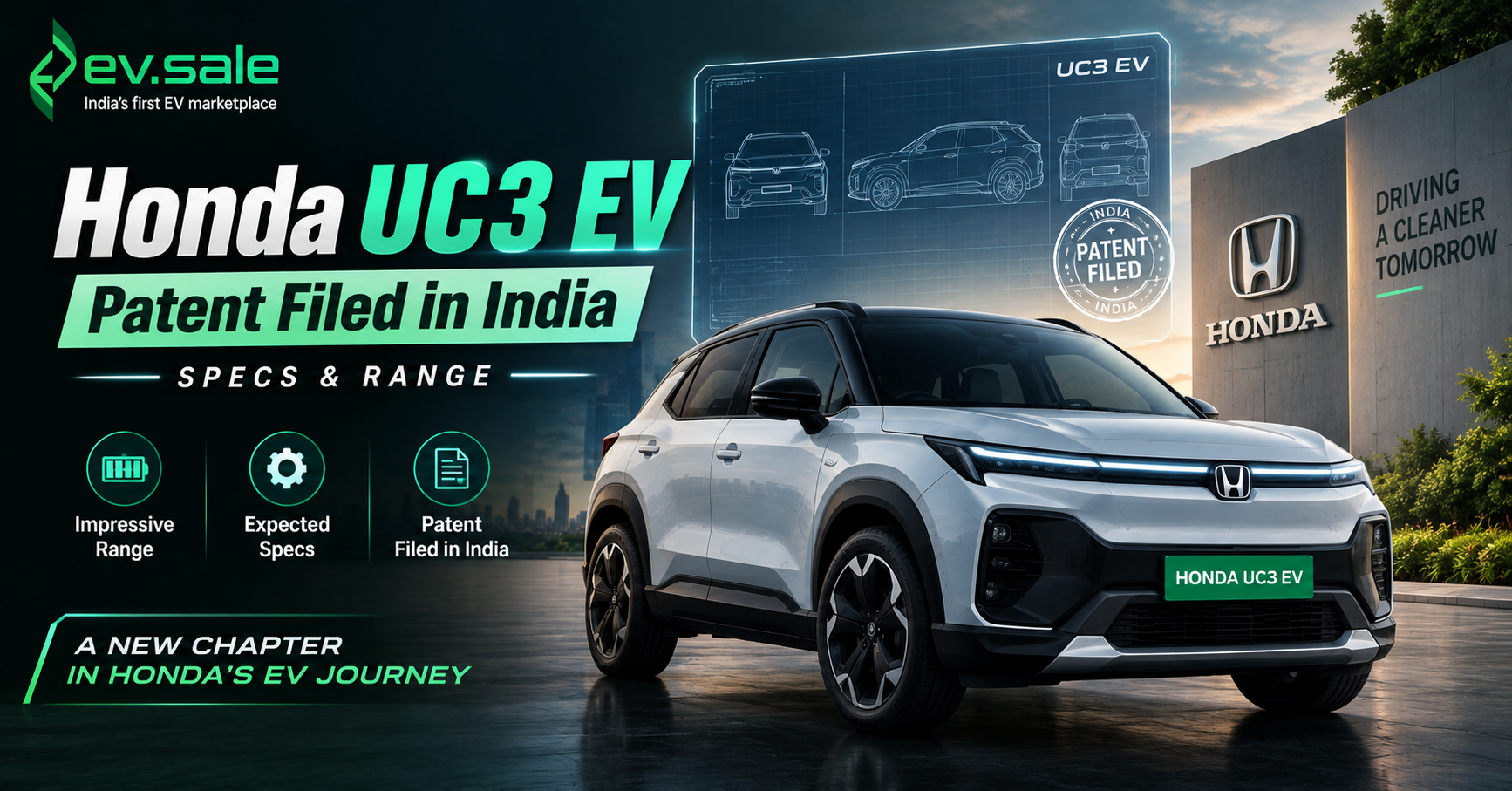
Honda has created fresh interest in India’s electric two-wheeler market after filing a design patent for its UC3 electric scooter. The model has already been introduced in Thailand and Vietnam, where Honda is positioning it as an electric alternative to a conventional 110cc-class scooter. Its Indian patent filing does not confirm a launch, but it does indicate that Honda is protecting the UC3’s design in a market that is rapidly shifting towards electric mobility. With a claimed range of up to 122km, a 6kW motor and an LFP battery, the UC3 has the specifications to attract attention if Honda eventually considers bringing it to Indian customers.
The timing of the patent is particularly interesting because India’s electric two-wheeler industry has changed significantly over the past few years. Electric scooters have moved from being a niche choice for early adopters to a mainstream option for urban commuters, with manufacturers competing on range, battery technology, charging speed, connected features and price. At the same time, traditional automotive companies are investing more heavily in EVs, making the segment increasingly competitive. Honda’s global electric portfolio suggests that the company is preparing for a larger role in this transition, and the UC3 could potentially become another product in that journey.
Honda UC3 Patent Filing Raises Questions About an India Launch
The UC3 patent filing has caught attention because Honda has already put the model into production in other Asian markets. Honda officially unveiled the UC3 in January 2026 for Thailand and Vietnam, with production beginning at Thai Honda in December 2025. The company also announced plans for local production in Vietnam during 2026, showing that the scooter is not merely an experimental concept. Honda describes the UC3 as an “Intelligent Urban Life Partner”, reflecting its focus on connected technology and everyday urban transportation. However, the Indian filing should be viewed as a design-protection step rather than confirmation of a showroom launch.
For people searching for the Best EV Marketplace in India, the Honda UC3 story highlights how quickly the country’s electric vehicle landscape is expanding. Indian consumers today can choose from electric scooters designed primarily for commuting, premium models aimed at technology-focused buyers and performance-oriented products targeting enthusiasts. The arrival of more global EV designs could further increase this variety. As new electric vehicles become more common, their eventual entry into the pre-owned market will also create a larger pool of used EVs. This makes access to reliable vehicle information increasingly important for both buyers and sellers.

Honda UC3 Battery and Range Explained
The UC3’s battery technology is one of the most interesting aspects of the scooter. Honda has equipped the international version with a fixed LFP battery of approximately 3.2kWh, marking a move towards lithium iron phosphate chemistry for this product. Honda claims a range of up to 122km per charge under WMTC Mode 1 in Thailand, although the actual distance achieved in everyday riding can vary depending on speed, traffic, load and weather. Unlike some Indian electric scooters with removable battery packs, the UC3 uses a fixed battery architecture. This means charging is performed through an external charger rather than by carrying the battery indoors.
Charging performance also gives the UC3 flexibility for different ownership patterns. Honda offers 450W and 1,200W charging options, with a 20–80% charging time of approximately five hours using the lower-output charger and around two hours using the higher-output unit. This approach allows customers to select a charging setup based on their daily usage and available charging infrastructure. The scooter’s maximum motor output is rated at 6kW, giving it considerably more performance than basic entry-level electric scooters. If the same specification were introduced in India, it would place the UC3 in an interesting space between practical urban commuting and premium electric mobility.
Design Gives the UC3 a Different Identity
Honda has given the UC3 a distinctive design that separates it from smaller electric commuter scooters. The front section has a maxi-scooter influence, while the side profile combines modern surfaces with a slightly neo-retro character. The model uses 12-inch wheels at both ends, weighs approximately 129kg and has a seat height of around 779mm. Its under-seat storage capacity is about 26 litres, providing enough space for everyday items and improving its practicality for city users. The dimensions suggest that Honda has designed the scooter for customers who want a substantial road presence without moving into the size of a full maxi-scooter.
The equipment list reinforces the premium positioning. The UC3 gets a 5-inch TFT display with Honda RoadSync connectivity, allowing riders to access connected functions through compatible devices. It also features traction control, keyless operation, a Type-C charging port and three riding modes: Econ, Standard and Sport. A reverse function makes low-speed manoeuvring easier, while adaptive regenerative braking can adjust energy recovery according to riding conditions. These features show how the UC3 combines everyday practicality with technology that is increasingly becoming expected in premium electric scooters.
What the Honda UC3 Could Mean for India’s EV Market
The Honda UC3 could become particularly interesting if the company decides to localise the model for India. The country has one of the world’s largest two-wheeler markets, and urban consumers are becoming increasingly comfortable with electric alternatives. Honda already has a massive presence in the Indian two-wheeler industry, giving it access to a large customer base and an established service network. A locally produced UC3 could therefore benefit from the brand’s existing infrastructure. However, the final price, battery configuration and equipment would be crucial in determining whether the scooter could compete successfully against established electric rivals.
For the Best EV Marketplace in India, developments such as the UC3 patent are important because every new EV entering the market contributes to the growth of the broader electric ecosystem. New technology eventually influences the used market as well, particularly when customers begin upgrading from their first electric vehicles. A scooter equipped with an LFP battery could attract future used buyers interested in long-term battery durability, although actual resale performance would depend on battery health and ownership history. As India’s EV population grows, information about battery condition could become just as important as kilometres driven when evaluating a used electric vehicle.
Honda UC3 Price in India: What We Know So Far
There is currently no official Honda UC3 price for India, because Honda has not confirmed that the model will be launched domestically. The scooter is priced at around THB 142,600 before subsidies in Thailand, which has been reported as approximately ₹4.1 lakh based on prevailing exchange rates. Thailand’s pricing cannot be directly converted into an Indian expected ex-showroom price because local taxes, manufacturing costs, component sourcing and government policies can all differ significantly. If Honda decides to manufacture the UC3 in India, increased localisation could potentially result in a considerably different price structure.
The price question is particularly important because India’s electric two-wheeler market is highly competitive. Customers can already choose from models priced well below ₹1 lakh, while premium electric scooters extend beyond ₹1.5 lakh depending on specifications and battery size. A globally developed product such as the UC3 would therefore need a carefully considered pricing strategy to attract Indian buyers. Honda could potentially position it as a premium urban scooter, but its success would depend on how consumers compare range, charging convenience, performance and ownership costs against competing products.
Will Honda UC3 Launch in India?
At this stage, Honda has not announced an India launch date for the UC3. Patent filings should not automatically be interpreted as confirmation that a vehicle will be sold in a particular market. Manufacturers frequently protect designs and technologies in countries where they may potentially operate, even when a production or launch decision has not yet been taken. Honda’s Indian EV strategy currently includes other products, including the QC3 electric scooter, which has been specifically developed for the domestic market. Therefore, the UC3’s future in India remains open rather than confirmed.
That said, the filing makes the model worth watching. The UC3’s 3.2kWh LFP battery, 122km claimed range, 6kW motor and connected features could give Honda an interesting product for India’s increasingly premium electric scooter segment. Local manufacturing could also help the company control costs and adapt the scooter to Indian customer requirements. If Honda eventually announces production, more details about Indian specifications, pricing and range will become available. Until then, the patent should be viewed as a signal of interest rather than a confirmed launch announcement.
Why Buy Used EV Cars in Bangalore Could Gain More Attention
Bengaluru is already one of India’s strongest markets for electric mobility, and its large technology-driven population has contributed to widespread interest in EVs. The city’s daily commuting patterns also make electric vehicles practical for many users who travel predictable distances between home and work. As more electric cars and scooters enter Bengaluru’s roads, a growing number will eventually reach the second-hand market. This could create an opportunity for customers who want the benefits of electric mobility but do not want to pay the full price of a brand-new vehicle.
For customers planning to Buy Used EV Cars in Bangalore, the lower upfront cost can be attractive, but buyers should look beyond the advertised price. Battery condition, remaining warranty, charging history and service records can significantly influence the true value of a used EV. Buyers should also check the charging port, original charger, tyres, brakes, suspension and electronic systems before completing a transaction. Registration and insurance documents should be verified carefully as well. A detailed inspection can help buyers understand whether a lower-priced EV represents genuine value or could lead to higher ownership costs later.
EV.sale and the Growing Pre-Owned EV Opportunity
As India’s EV market develops, EV.sale provides an EV-focused online platform where customers can explore electric vehicles listed for sale. A specialised marketplace is becoming increasingly relevant because EV buyers often require more information than traditional used-car shoppers. Details such as battery capacity, battery health, charging history, warranty coverage and service records can influence an electric vehicle’s value considerably. Bringing such information together with conventional vehicle details can make the buying process easier for customers who are entering the pre-owned EV market for the first time.
Customers looking for the Best EV Marketplace in India can visit EV.sale to explore available electric vehicle listings and connect with sellers. The platform gives sellers an opportunity to present their vehicles to people who are specifically interested in electric mobility. Buyers can compare vehicles according to factors such as model, registration year, kilometres driven and asking price while also considering EV-specific information. As more electric vehicles reach the used market, having a dedicated destination for these transactions could help improve transparency and make vehicle discovery more convenient.
How to List Your EV on EV.sale
Listing an electric vehicle on EV.sale starts with creating an account and entering accurate details about the vehicle. Sellers should provide the make, model, variant, registration year, kilometres driven, number of owners and expected selling price. EV-specific information can make the listing even more useful, including battery capacity, available battery-health details, charging information, warranty status and service history. Sellers should upload clear photographs showing the exterior, interior, dashboard, tyres, charging port and charging equipment. A complete listing can give potential buyers a much better understanding of the vehicle before they make an enquiry.
For owners hoping to reach customers who want to Buy Used EV Cars in Bangalore, transparency is especially important. Any known accident repairs, major component replacements, cosmetic damage or other relevant issues should be disclosed clearly. Buyers are more likely to engage seriously when they have sufficient information to evaluate the vehicle before arranging an inspection. A detailed listing can also reduce repeated questions about basic specifications and ownership history. As India’s pre-owned EV industry develops, sellers who provide strong documentation and accurate information could have an advantage when competing with similar vehicles.
What the Future Holds for Honda and Electric Scooters
The Honda UC3 arrives at an interesting point in the evolution of electric two-wheelers. The first generation of Indian EV scooters largely competed on affordability and basic range, but the latest products are increasingly differentiated through software, connectivity, battery chemistry, charging speed and performance. Consumers are also paying closer attention to warranty coverage and long-term ownership costs. This means the next wave of EV competition will not simply be about offering the highest claimed range. Manufacturers will need to build confidence around reliability, service support and battery longevity as well.
If Honda eventually introduces the UC3 in India, the scooter could benefit from the company’s established reputation and extensive two-wheeler presence. Its LFP battery, 6kW motor and 122km claimed range could give it a strong technical foundation, while the premium styling and connected equipment could appeal to younger urban customers. However, pricing will remain one of the biggest questions. Whether Honda chooses to position it below premium competitors or target a higher segment will ultimately determine how much impact the UC3 can have on India’s electric scooter market.
Why the UC3 Patent Matters for the Used-EV Market
The Honda UC3 patent is also a reminder that India’s future EV market will extend far beyond new vehicle registrations. As today’s electric scooters and cars become older, their owners will eventually sell them, creating a much broader pre-owned market. Customers who were unable to justify the cost of a new EV may instead choose a two- or three-year-old vehicle. This could make electric mobility more accessible to a larger section of the population. However, the used market will require reliable information to prevent uncertainty around battery degradation and ownership costs.
For buyers searching for the Best EV Marketplace in India, this future market will depend heavily on transparent listings and trustworthy vehicle information. Customers looking to Buy Used EV Cars in Bangalore may soon have access to a much wider selection of electric models, ranging from compact city vehicles to premium SUVs. Battery-health reports, warranty documentation and charging history could become standard parts of the used-EV buying process. EV.sale can support this transition by giving sellers a platform to showcase their vehicles while helping buyers discover electric vehicles that match their requirements.
The Bigger Picture for India’s EV Transition
India’s electric vehicle story has progressed rapidly from early experimentation to a market with established manufacturers, dedicated EV brands and increasingly sophisticated products. Government support, expanding charging infrastructure and growing awareness have all contributed to this transition. The electric two-wheeler category remains particularly important because scooters are widely used for everyday urban transportation. As technology improves and production volumes rise, customers can expect more choices across different price brackets. This competition should encourage manufacturers to improve battery technology, efficiency, performance and after-sales service.
Honda’s UC3 patent fits into this larger transformation even though its India launch remains unconfirmed. The model demonstrates the type of technology and design that established global manufacturers are developing for the next generation of urban electric mobility. Whether or not the UC3 eventually reaches Indian dealerships, its presence in Honda’s global portfolio shows that the company is continuing to expand its electric ambitions. For Indian consumers, that could eventually mean more choices and greater competition across the electric two-wheeler market.
Continue Reading: Tata.ev, Mahindra & MG Lead EV Sales in August 2026
Conclusion: Honda UC3 Patent Opens a New Possibility
Honda’s decision to file a design patent for the UC3 in India has generated interest because the scooter combines a distinctive design with a relatively sophisticated electric powertrain. The international model features a 3.2kWh LFP battery, claimed 122km range, 6kW motor, 12-inch wheels and connected technology, making it considerably more substantial than a basic electric commuter scooter. However, Honda has not confirmed an Indian launch, price or local specifications. For now, the patent should be seen as an indication that the company is protecting the model’s design rather than a confirmation of an upcoming launch.
For customers researching the Best EV Marketplace in India, developments like the UC3 show how quickly the electric vehicle landscape is expanding. The bigger opportunity is likely to emerge as today’s new EVs become tomorrow’s pre-owned vehicles. People planning to Buy Used EV Cars in Bangalore will increasingly need access to information about battery condition, service history, warranty coverage and ownership records. As this market develops, EV.sale can provide a dedicated environment for discovering and listing electric vehicles, helping buyers and sellers participate in India’s next stage of EV growth.
Is the Honda UC3 launching in India?
Honda has filed a design patent for the UC3 in India, but the company has not officially confirmed an India launch. A patent protects a vehicle’s design and does not necessarily mean production or sales will begin in that market. The UC3 is currently available in markets including Thailand and Vietnam. Honda’s future decision will depend on its Indian EV strategy, localisation plans and market demand.
What is the Honda UC3 range?
The Honda UC3 has a claimed range of 122km per charge under WMTC Mode 1 in Thailand. It uses a fixed 3.2kWh LFP battery and a 6kW electric motor. Honda offers 450W and 1,200W charging options, with the faster charger reducing the 20–80% charging time to around two hours. Real-world range can vary according to speed, traffic, rider weight, weather and riding conditions.
What battery does the Honda UC3 use?
The international Honda UC3 uses a 3.2kWh fixed LFP battery. LFP, or lithium iron phosphate, is increasingly being considered for applications where durability and thermal stability are important. Honda has previously used NMC chemistry in some electric products, making the UC3’s LFP battery an interesting change. Indian battery specifications would need to be confirmed if Honda decides to launch the scooter locally.
What could be the Honda UC3 price in India?
Honda has not announced an India price for the UC3. The model is priced at approximately THB 142,600 before subsidies in Thailand, which translates to roughly ₹4.1 lakh based on recent exchange rates. This should not be treated as an expected Indian price because local manufacturing, taxation and component sourcing could significantly change the final cost. An India-specific price will only be known if Honda confirms a domestic launch.
Where can I Buy Used EV Cars in Bangalore?
Customers looking to Buy Used EV Cars in Bangalore can explore EV.sale for available electric vehicle listings and compare vehicles according to their requirements. Before purchasing, buyers should examine the battery condition, registration year, kilometres driven, warranty, service history, charging equipment and ownership records. Sellers can create detailed listings with photographs and EV-specific information. This makes it easier for genuine buyers to discover suitable pre-owned electric vehicles and connect with sellers.
Leave a Reply