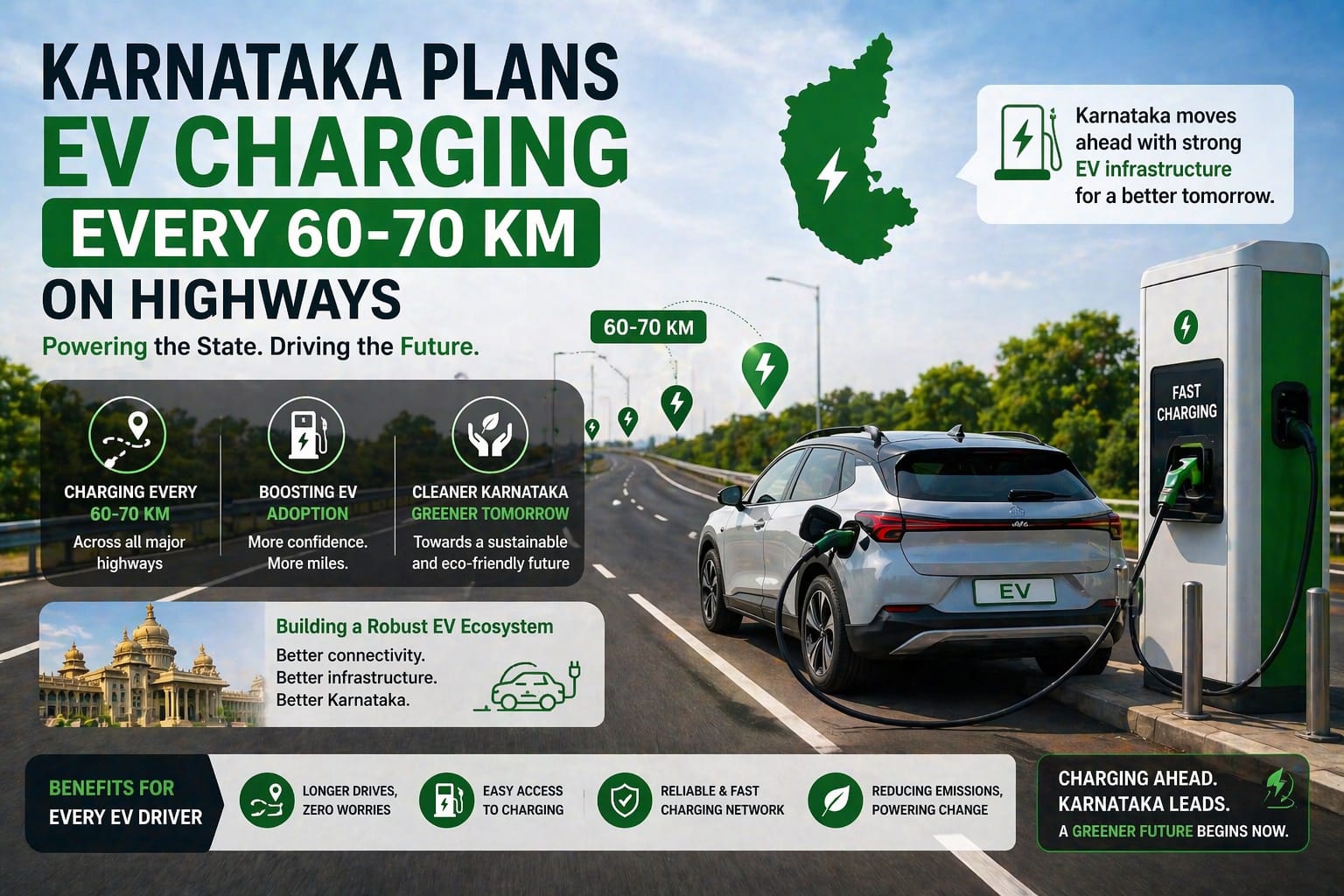
Karnataka is taking a decisive step toward strengthening electric mobility by planning to install EV charging stations at intervals of every 60–70 kilometres along its highways. This initiative is not just about infrastructure expansion—it reflects a broader vision to make long-distance electric travel reliable, practical, and widely accessible.
One of the biggest barriers to EV adoption has been range anxiety, especially for highway travel. While urban charging infrastructure has improved significantly, intercity journeys still pose challenges for EV users. By ensuring consistent charging availability along major routes, Karnataka is directly addressing this concern and building confidence among both current and potential EV owners.
Strategic Implementation
The initiative is being implemented through a collaboration between the Bangalore Electricity Supply Company (BESCOM) and the Karnataka Road Development Corporation Limited (KRDCL). Together, they aim to deploy charging stations across nearly 3,000 kilometres of road infrastructure.
A key strength of this plan lies in its strategic placement of charging stations. Instead of forcing drivers to deviate from their routes, stations will be installed at:
- Toll plazas
- Bus bays
- Truck lay-bys
These locations align with natural stopping points, allowing users to charge their vehicles conveniently without disrupting travel. This approach ensures a seamless and time-efficient experience for EV users.
Strengthening Karnataka’s EV Leadership
Karnataka already ranks among the leading states in EV adoption, particularly in urban centers like Bangalore. The growth of charging infrastructure in cities has played a major role in encouraging commuters to shift to electric mobility.
With the highway expansion, this convenience will extend beyond city limits, enabling smooth intercity travel. This integrated approach—urban plus highway infrastructure—creates a complete EV ecosystem, making electric mobility viable for both daily commuting and long-distance journeys.
Infrastructure Driving Adoption
Infrastructure readiness is critical for the success of electric vehicles. Rising fuel costs, environmental concerns, and global energy uncertainties have made the transition to cleaner mobility more urgent than ever.
By proactively expanding its charging network, Karnataka is not just responding to current demand—it is anticipating future growth. Feasibility assessments conducted across multiple locations indicate that most proposed sites are practical for deployment, demonstrating a strong focus on execution rather than just policy announcements.
Economic and Sectoral Impact
The impact of this initiative will extend beyond individual EV users:
- Logistics & Transport: Easier transition to electric fleets, reducing operational costs and emissions
- Tourism: Greater confidence for travelers to explore destinations without charging concerns
- Local Businesses: Increased footfall near charging points, creating new economic opportunities
As charging infrastructure becomes more accessible, consumer behavior is expected to shift significantly toward electric vehicles.
Role of Digital Platforms
Alongside infrastructure, digital platforms are playing a crucial role in accelerating EV adoption. Marketplaces like EV.Sale simplify the buying and selling process by offering verified listings, transparent information, and a user-friendly experience.
For many first-time buyers, access to reliable information and options is essential. As infrastructure improves, such platforms will become even more important in helping users transition smoothly to electric mobility.
A Model for the Future sell ev cars online
Karnataka’s plan to install charging stations every 60–70 kilometres could set a benchmark for other states. As the benefits of a well-connected charging network become evident, similar initiatives may be adopted nationwide.
The integration of charging infrastructure into public transit spaces—such as toll plazas and transport hubs—also reflects a shift in how mobility is being reimagined. It is no longer just about vehicles, but about building an ecosystem where infrastructure, technology, and user experience work together seamlessly.
FAQs
What is Karnataka’s EV charging plan?
Karnataka plans to install EV charging stations every 60–70 km along major highways to ensure reliable long-distance travel.
Where will these stations be located?
They will be placed at toll plazas, bus bays, and truck lay-bys for maximum convenience.
Why is this important?
It reduces range anxiety and makes EV ownership more practical, especially for intercity travel.
How will this impact EV adoption?
Improved infrastructure increases user confidence and encourages more people to switch to electric vehicles.
What role do marketplaces play?
Platforms like EV marketplaces help users explore, compare, and purchase EVs easily, supporting overall adoption.
Leave a Reply