India’s shift to electric mobility is no longer a future trend—it is already happening. In 2024, EV sales crossed 1.5 million units, rising sharply from around 130,000 in 2019. That is a tenfold increase in under five years. With EV adoption expected to reach nearly 30 percent by 2030, buyers today are entering a fast-evolving market.
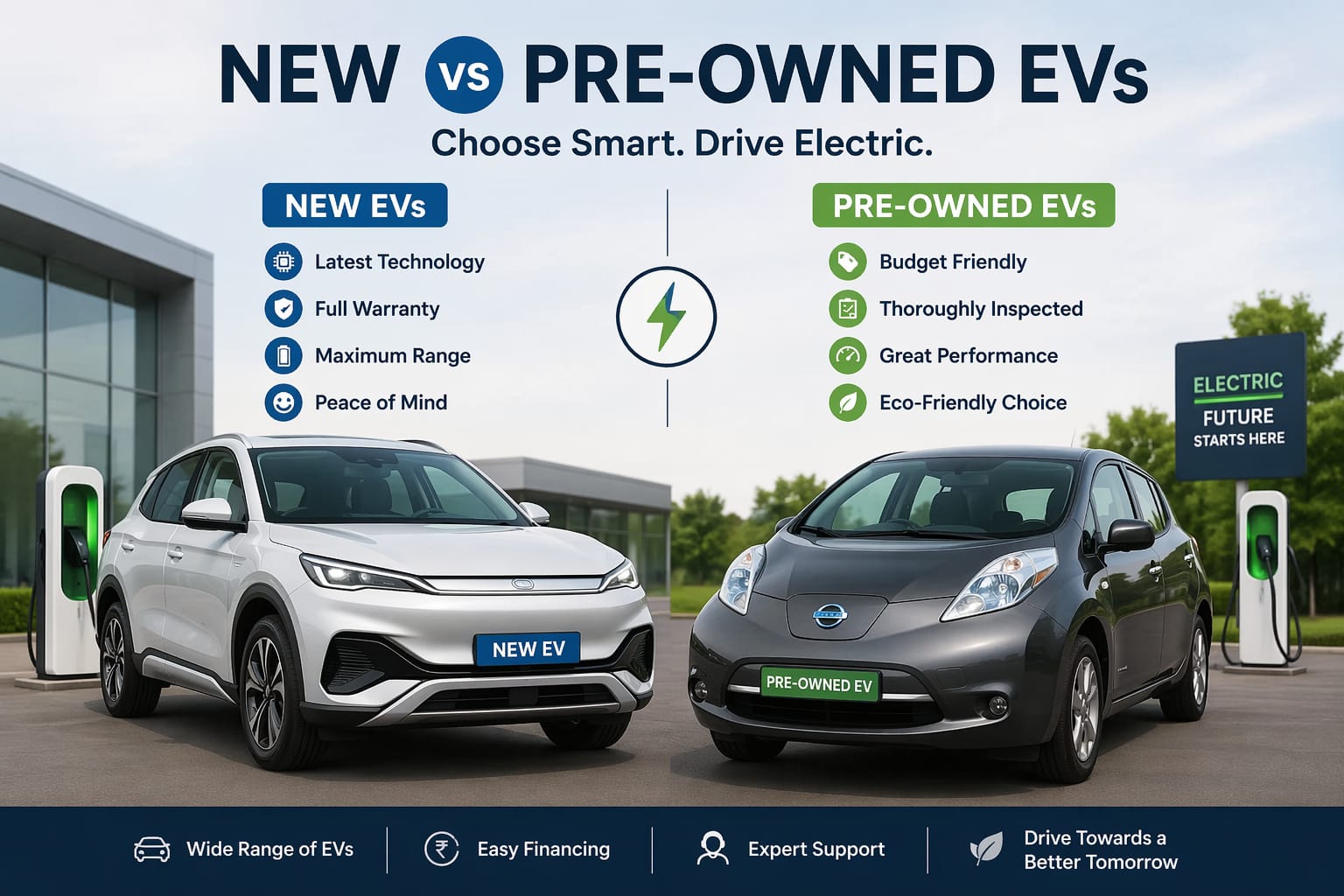
As more people consider switching, the decision is no longer just about buying an EV—it is about choosing how to own one. For many, the key question is whether it is better to buy a new or pre owned EV, especially when both options offer clear advantages.

The Economics Behind EV Pricing
EV pricing has changed dramatically over the last decade. In 2010, lithium-ion battery costs were over $1100 per kWh, but by 2025, they have dropped to nearly $130 per kWh—almost a 90 percent reduction. Since batteries account for 30 to 40 percent of an EV’s cost, this has made EVs more accessible.
In India, entry-level EVs are priced between ₹8 lakh and ₹12 lakh, while mid-range models go beyond ₹20 lakh. However, EVs are still about 10 to 15 percent more expensive upfront than petrol cars.
Depreciation plays a key role. A new EV can lose 20 to 30 percent of its value within two years and up to 40 percent within four years. This allows buyers to purchase a pre-owned EV at ₹2 lakh to ₹5 lakh less.
Key pricing insights:
- Battery costs have dropped nearly 90 percent
- Most depreciation happens in the first 2 to 4 years
- Pre-owned EVs can save ₹2 lakh to ₹6 lakh
- Entry-level EVs are becoming more affordable
New EVs and the Advantage of Latest Technology
New EVs attract buyers because of improved technology. Earlier, EVs offered 150 to 200 km range per charge, but today most models deliver 300 to 500 km, with premium options exceeding 600 km.
Charging has also improved. What once took 6 to 8 hours can now reach 80 percent in about 40 to 60 minutes using fast chargers.
Warranty coverage adds confidence. Most manufacturers offer:
- Battery warranty up to 8 years or 160,000 km
- Vehicle warranty between 3 to 5 years
Government incentives further reduce costs, offering savings of ₹50,000 to ₹1.5 lakh. Meanwhile, charging infrastructure has grown from under 1,000 stations in 2018 to over 12,000 in 2025.
Why buyers choose new EVs:
- Latest features and better range
- Faster charging options
- Strong warranty protection
- Access to subsidies and benefits
Pre-Owned EVs and the Value Advantage
Pre-owned EVs are popular because of their affordability. A 2 to 3-year-old EV can cost 25 to 35 percent less, saving ₹2 lakh to ₹6 lakh.
Battery performance has proven reliable, degrading only 2 to 3 percent per year. Even after five years, most retain around 85 to 90 percent capacity, which is sufficient for daily use.
Maintenance is another advantage. EV owners spend 30 to 40 percent less than petrol car owners, with annual servicing costs around ₹5,000 to ₹10,000.
Why pre-owned EVs are a smart choice:
- Lower upfront cost
- Reliable battery life
- Reduced maintenance expenses
- Avoids steep early depreciation
Comparing Long-Term Ownership Costs
EVs are far cheaper to run than petrol cars:
- EV cost: ₹1 to ₹1.5 per km
- Petrol cost: ₹5 to ₹7 per km
For someone driving 15,000 km annually, this means savings of ₹60,000 to ₹90,000 per year, or ₹3 lakh to ₹4.5 lakh over five years.
Pre-owned EV buyers benefit even more by combining lower purchase prices with these savings. However, since new models arrive every 2 to 3 years, the choice depends on whether you value the latest technology or overall savings.
Future Outlook and Market Growth
India’s EV market is expected to reach $150 billion by 2030, with annual sales crossing 10 million units. Government support, better infrastructure, and falling costs are driving this growth.
With innovations like faster charging and improved batteries, EV adoption will continue to rise. At the same time, the pre-owned EV market will expand, offering more options and better value.
Final Thoughts sell ev cars online
Choosing between a new and a pre-owned EV depends on your budget, usage, and long-term goals.
New EVs offer better technology, range, and warranty coverage. Pre-owned EVs provide strong value with lower upfront costs and dependable performance.
For most buyers, the right decision comes down to balancing cost with convenience. Comparing both options carefully will help you make a confident and informed choice.
Is it better to buy a new EV or a pre-owned EV in India?
It depends on your budget and priorities. A new EV offers the latest features, longer range, and full warranty coverage, making it ideal for long-term ownership. A pre-owned EV is more affordable and helps you avoid initial depreciation. If you want value for money, a used EV can be a smart choice.
How much money can I save by buying a pre-owned EV?
You can typically save between ₹2 lakh to ₹6 lakh by choosing a pre-owned EV instead of a new one. Since most depreciation happens in the first few years, you get a relatively new vehicle at a much lower price. Combined with low running costs, this makes it a cost-effective option.
What is the lifespan of an electric vehicle battery?
EV batteries usually last between 8 to 15 years, depending on usage and charging habits. Even after 5 years, most batteries retain around 85 to 90 percent of their capacity. With proper maintenance, they continue to deliver reliable performance for everyday driving.
Are EVs cheaper to maintain than petrol cars?
Yes, EVs are generally 30 to 40 percent cheaper to maintain than petrol vehicles. They have fewer moving parts, no engine oil, and lower wear and tear. Annual servicing costs are typically between ₹5,000 and ₹10,000, making them more economical in the long run.
What should I check before buying a pre-owned EV?
Before buying a used EV, check the battery health report, service history, and warranty status. It is also important to inspect charging compatibility and overall vehicle condition. Buying from a trusted platform or verified seller ensures transparency and reduces risk.
Leave a Reply