India’s electric vehicle story has changed dramatically over the last few years. What once looked like a futuristic concept is now becoming part of everyday life in major cities across the country. From electric scooters used for office commutes to family EVs replacing petrol cars, Indian consumers are rapidly shifting toward cleaner and smarter mobility solutions. One of the biggest reasons behind this transformation is the rise of smart EV home charging.
Back in 2019, electric vehicle adoption in India was still at a very early stage, with annual EV sales remaining below 150,000 units. Fast forward to 2026, and the market is expected to cross 2 million electric vehicle sales across passenger cars, scooters, and commercial fleets. This growth is not happening only because of environmental awareness. Rising petrol prices, lower running costs, better battery technology, and smarter charging systems are changing how Indians think about transportation.
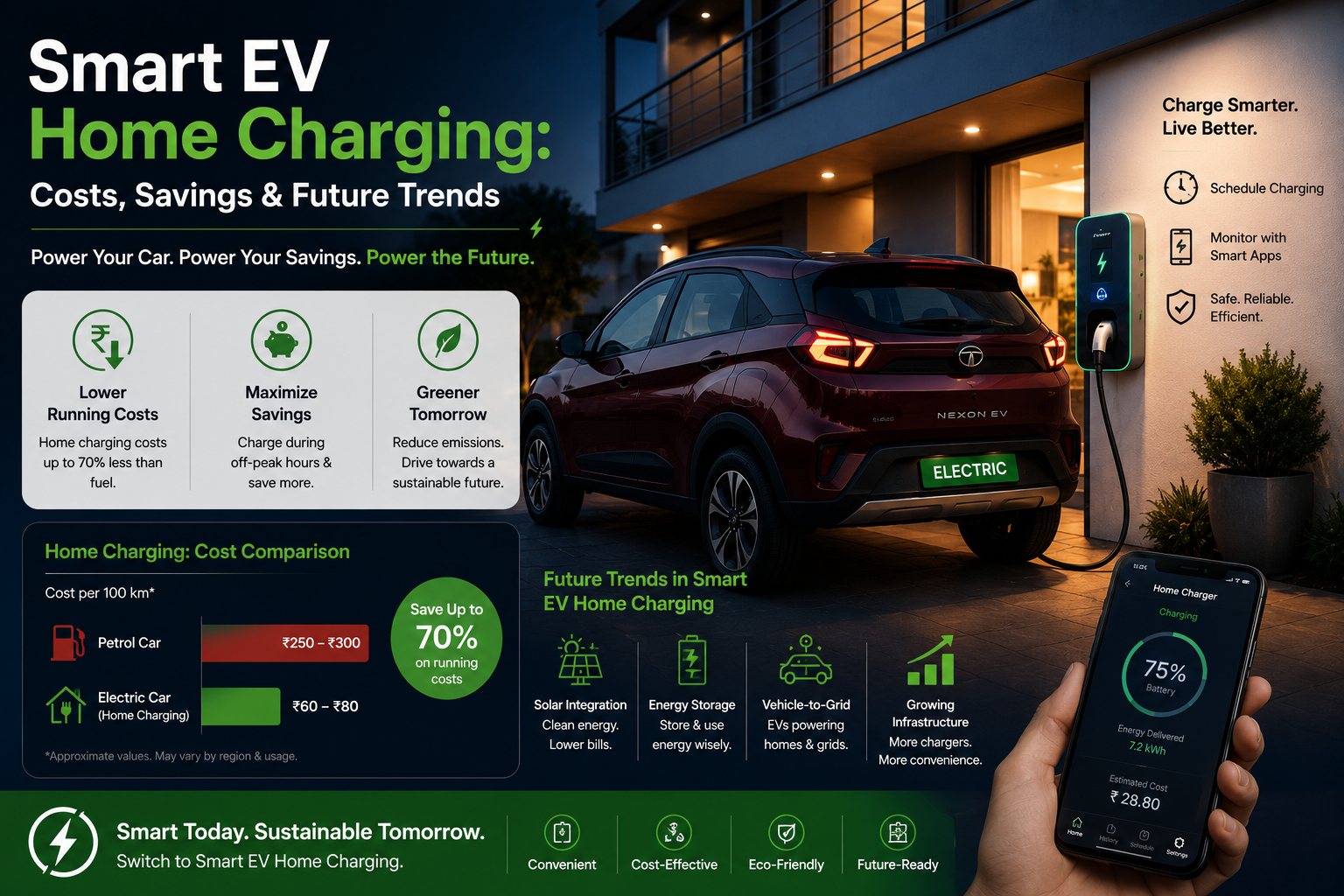
Today, charging an EV at home has become cheaper than visiting a petrol station. While petrol vehicles can cost nearly ₹7 to ₹10 per kilometre in daily city traffic, most electric vehicles operate at around ₹1 to ₹2 per kilometre through residential charging. This cost advantage is creating long-term savings that are difficult for traditional fuel vehicles to match.
At the same time, dedicated EV platforms like EV.Sales are helping buyers and sellers participate in India’s rapidly growing electric mobility ecosystem with greater confidence and convenience.
Why Smart Home Charging Is Becoming a Major Part of EV Ownership
In the early days of EV adoption, home charging was viewed simply as plugging the vehicle into a wall socket overnight. However, the market has evolved rapidly. Smart charging systems now include app-based controls, scheduled charging, battery monitoring, energy optimisation, and even solar integration for sustainable power usage.
India currently has more than 18,000 public charging stations either operational or under development. Despite this expansion, studies show that nearly 70% of EV users still prefer charging their vehicles at home because it is more affordable and convenient. Smart charging systems also help users reduce electricity expenses by automatically charging vehicles during off-peak tariff hours.
For example, fully charging a mid-sized electric car with a 30 kWh battery can cost between ₹250 and ₹320 at home depending on local electricity rates. The same charging session through public fast charging may cost nearly double. Over an entire year, EV owners can save anywhere between ₹60,000 and ₹1 lakh compared to petrol vehicle owners.
The Indian smart charging market is also growing quickly. Industry experts estimate that the sector could grow at more than 25% CAGR until 2030 as residential charging infrastructure becomes more common in apartment communities and urban housing projects. Cities like Bengaluru, Hyderabad, Chennai, and Pune are already seeing increased demand for private EV chargers in homes and office parking areas.
Why More Owners Choose to Sell EV Cars in Bangalore Through EV-Focused Platforms
Bangalore has become one of India’s strongest EV markets because of its technology-driven population, strong startup culture, and growing charging network. Over the last few years, the city has witnessed a sharp rise in electric vehicle ownership across both two-wheelers and four-wheelers.
As EV awareness grows, many owners now prefer to Sell EV Cars in Bangalore through dedicated electric vehicle marketplaces instead of traditional automobile platforms. Buyers today are not only interested in the vehicle’s condition. They also want transparency about battery performance, charging compatibility, driving range, and software updates.
This change is reshaping the used EV industry. Industry reports suggest that India’s pre-owned EV market could grow by more than 40% annually during the next five years. Bangalore is expected to remain one of the leading contributors because of its rapidly expanding EV ecosystem.
Smart charging habits are also influencing resale value. EVs maintained with proper charging schedules and controlled battery usage often perform better over time. Research indicates that batteries managed under smart charging conditions can retain nearly 80% to 90% of their original efficiency even after several years of usage.
For consumers, this creates greater confidence while purchasing second-hand EVs. For sellers, it improves the chances of attracting serious buyers who understand electric mobility and long-term ownership value.
Platforms like EV.Sales are becoming increasingly important because they create a dedicated ecosystem where EV buyers and sellers can connect with better transparency and EV-specific information.
The Economics Behind EV Charging Savings
The financial advantage of electric mobility has become impossible to ignore. A petrol car driven nearly 1,500 kilometres every month can easily consume fuel worth ₹12,000 or more depending on mileage and traffic conditions. In comparison, an electric vehicle covering the same distance may require only ₹2,500 to ₹3,000 worth of electricity through smart home charging.
Maintenance costs also remain significantly lower. EVs have fewer moving parts compared to petrol or diesel vehicles. There are no engine oil changes, lower brake wear because of regenerative braking, and reduced servicing requirements overall. Experts estimate that EV owners save nearly 30% to 40% annually on maintenance expenses alone.
These savings are changing consumer behaviour across India’s resale market. Families are increasingly purchasing used EVs as city-friendly secondary vehicles, while younger commuters are turning toward electric scooters for affordable daily transportation.
As a result, many owners looking to Sell EV Bikes in Bangalore are now finding stronger demand than ever before. Delivery executives, office commuters, and college students are actively choosing electric two-wheelers because of lower operating costs and reduced fuel dependency.
The growing charging infrastructure is further supporting this transition. Bengaluru alone is expected to add several thousand charging points over the next decade, helping reduce range anxiety and improving confidence among first-time EV buyers.
Best EV marketplace in Bangalore Is Supporting India’s EV Transition
The rapid growth of EV adoption has also changed how vehicles are bought and sold online. Traditional automobile platforms often fail to provide detailed EV-specific information related to battery condition, charging support, software updates, and charging compatibility.
This gap has created demand for specialised EV marketplaces that focus entirely on electric mobility. As the Best EV marketplace in Bangalore, EV.Sales is helping bridge this gap by creating a dedicated platform for EV buyers and sellers.
Consumers upgrading their vehicles are now more aware of factors like battery degradation, fast-charging support, and charging history before making purchase decisions. Dedicated EV marketplaces simplify this process by connecting genuine EV-focused buyers with sellers who understand the market.
India’s EV penetration is expected to reach nearly 30% of all vehicle sales by 2030. Battery prices have already fallen dramatically from nearly $1,100 per kWh in 2010 to close to $130 per kWh globally today. This reduction is expected to continue improving affordability and accelerate EV adoption further.
At the same time, owners planning to Sell EV Bikes in Bangalore are benefiting from rising demand for electric scooters and motorcycles in urban markets where fuel costs continue to increase.
The role of the Best EV marketplace in Bangalore will become even more important in the coming years as battery verification systems, financing support, AI-driven pricing tools, and smart resale evaluations become part of India’s EV ecosystem.
The Future of Smart EV Charging in India
The future of EV charging in India is moving toward intelligence, automation, and sustainability. Industry experts believe that solar-powered charging systems, AI-managed charging schedules, and vehicle-to-grid technology will become more common during the next decade.
Home charging is expected to remain the backbone of India’s EV infrastructure because of its affordability and convenience. Smart charging systems will continue helping users save money while improving battery performance and energy efficiency.
The next stage of EV growth will not depend only on manufacturing more electric vehicles. It will also depend on making charging smarter, cheaper, and more accessible for everyday users.
With stronger government support, improving battery technology, lower running costs, and growing consumer confidence, India’s electric mobility future is accelerating faster than expected. Platforms recognised as the Best EV marketplace in Bangalore are becoming central to this transition by helping buyers and sellers participate in the country’s evolving EV ecosystem.
How much does smart EV home charging cost in India?
Smart EV home charging costs depend on battery size and local electricity tariffs. On average, most EV owners spend between ₹1 and ₹2 per kilometre through residential charging, which is significantly cheaper than petrol or diesel vehicles for daily commuting.
Is home charging better than public charging for EVs?
For regular daily usage, home charging is usually more affordable and convenient. Smart chargers also help optimise charging cycles and maintain better battery health. Public fast charging is mainly useful for long-distance travel or emergency charging situations.
Does smart charging improve EV battery performance?
Yes, smart charging systems help prevent overcharging, overheating, and unnecessary battery stress. Controlled charging habits can improve battery lifespan and maintain stronger efficiency levels over several years of ownership.
Why are used EVs becoming popular in Bangalore?
Bangalore has developed one of India’s strongest EV ecosystems with better charging infrastructure and higher EV awareness. Used EVs offer affordable ownership, lower maintenance costs, and significant fuel savings for urban commuters.
Which is considered the Best EV marketplace in Bangalore?
Dedicated EV platforms like EV.Sales are becoming increasingly popular because they focus entirely on electric mobility. Buyers and sellers receive access to EV-specific information, genuine enquiries, and a more targeted marketplace experience.
Leave a Reply