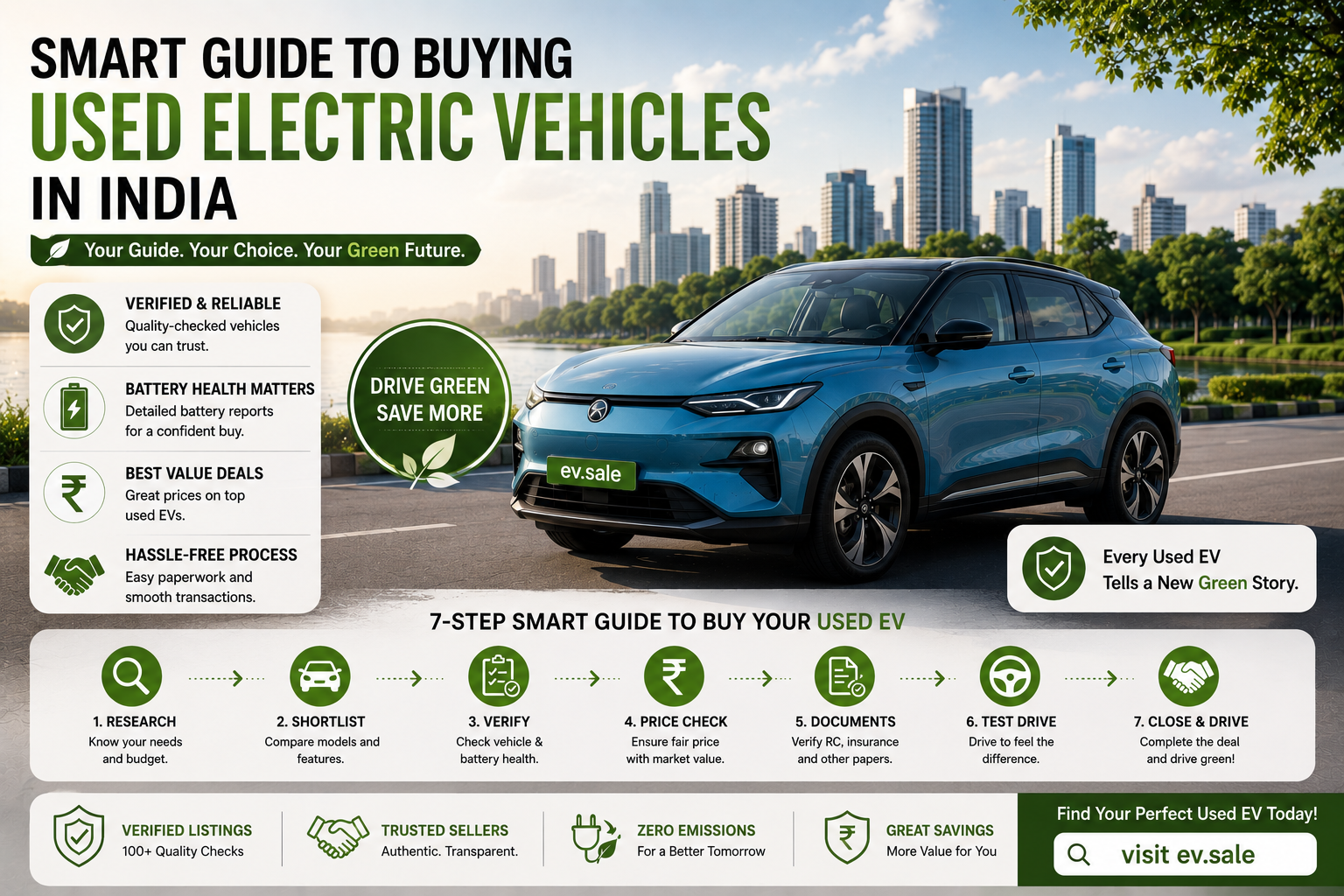
India’s electric vehicle industry is experiencing one of the biggest transformations in the country’s automotive history. What started as a niche segment a few years ago has now become a mainstream mobility movement. Rising fuel prices, growing charging infrastructure, and government support are encouraging Indian consumers to shift toward electric mobility faster than expected. According to recent industry reports, India crossed nearly 1.8 million EV sales in 2025 compared to less than 150,000 sales in 2019. This massive growth clearly shows how consumer confidence in EV technology has evolved over the years.
The demand for pre-owned electric vehicles has also increased rapidly. Many urban buyers are now choosing used EVs because they offer affordable ownership costs and modern technology without the high price tag of new electric vehicles. Running a petrol vehicle in India today can cost between ₹7 and ₹10 per kilometre depending on city traffic and fuel prices, while EVs usually cost only ₹1 to ₹2 per kilometre. This cost difference has become a major reason why thousands of Indian buyers are exploring the second-hand EV market.
As the market expands, consumers are also becoming smarter about their purchasing decisions. They are now researching battery health, charging compatibility, service history, and ownership costs before buying a vehicle. This shift has made the process of Buying Used Electric Vehicles in India much more informed and technology-driven than ever before.
The Rapid Growth of India’s Used EV Industry
India’s used electric vehicle ecosystem has grown significantly over the last three years. Earlier, most buyers were hesitant because charging stations were limited and battery replacement costs were unclear. Today, the situation has changed dramatically. India now has more than 12,000 public charging stations across major cities and highways, with Bengaluru, Delhi, Hyderabad, and Mumbai leading the EV expansion.
One of the strongest reasons behind this growth is affordability. A new electric car that originally costs around ₹15 lakh can now be purchased in the used market for nearly 35% to 45% less depending on battery condition and usage history. This affordability allows middle-income buyers to experience premium EV technology without making a huge financial commitment.
Industry experts predict that India’s used EV market could grow by more than 40% annually over the next five years. As battery technology improves and public awareness increases, the market for pre-owned EVs is expected to become even stronger. This trend is also creating opportunities for sellers who want to upgrade to newer electric vehicles with better range and advanced features.
Consumers are increasingly using dedicated EV platforms like EV.Sales because they provide EV-focused listings, battery transparency, and verified information that general automobile marketplaces often fail to deliver.
Buying Used Electric Vehicles in India Requires Smart Research
One of the most important steps while Buying Used Electric Vehicles in India is understanding battery condition. Unlike petrol or diesel vehicles, the battery is the heart of an electric vehicle. Its performance directly affects driving range, charging speed, and long-term ownership experience.
Experts recommend checking the battery health percentage before finalising any purchase. Most well-maintained EV batteries retain around 80% to 90% efficiency even after several years of use. Buyers should also verify service history, charging habits, and warranty details to avoid unexpected expenses in the future.
Charging compatibility is another important factor. Many modern EVs support fast charging, while others depend mainly on standard home charging systems. Home charging remains the most economical option in India, with electricity costs averaging ₹7 to ₹9 per unit. Public fast charging stations can cost nearly ₹18 to ₹25 per unit depending on the location and charging speed.
Insurance costs, software updates, tyre condition, regenerative braking systems, and accident history should also be checked carefully before purchasing a used EV. These details may appear small initially, but they significantly influence ownership satisfaction over time.
Why Buyers Prefer the Best EV marketplace in India
The biggest challenge in the second-hand EV market is trust. Buyers often worry about hidden battery problems, inaccurate range claims, or incomplete documentation. This is why EV-focused platforms are becoming increasingly important for modern consumers.
The Best EV marketplace in India is designed specifically for electric vehicle buyers and sellers. Unlike traditional vehicle portals, dedicated EV platforms help users understand battery health, charging compatibility, ownership costs, and vehicle performance in a more transparent manner.
Research indicates that online searches related to used electric vehicles in India have increased by nearly 300% over the last three years. Consumers are spending more time comparing battery range, charging networks, and long-term savings before making a decision. This change reflects a major shift toward informed EV purchasing behaviour.
The Best EV marketplace in India also creates a more targeted ecosystem where genuine EV buyers and sellers can connect without unnecessary confusion. Buyers get access to EV-specific information, while sellers benefit from a more relevant audience that already understands electric mobility.
Future of Electric Mobility and Consumer Savings
India’s electric mobility future looks extremely promising. Government initiatives, increasing fuel costs, and environmental awareness are all contributing to the rapid growth of EV adoption across the country. Industry analysts estimate that EV penetration in India could reach nearly 30% by 2030.
Battery prices have also reduced significantly over the past decade. In 2010, lithium-ion battery costs were nearly $1,100 per kWh globally. By 2025, prices have dropped closer to $130 per kWh due to technological advancements and higher production volumes. This reduction is making electric vehicles more affordable for the average Indian consumer.
For daily commuters travelling 40 to 60 kilometres per day, electric vehicles offer substantial long-term savings. EVs generally require less maintenance because they have fewer moving mechanical parts compared to petrol vehicles. Owners avoid expenses related to engine oil changes, complex gearbox repairs, and several routine servicing requirements.
As Buying Used Electric Vehicles in India becomes more common, consumers are expected to prioritise battery transparency and verified vehicle history even more. This trend will further strengthen specialised EV platforms and create a more organised pre-owned EV industry in the coming years.
Today, the decision to switch to electric mobility is no longer driven only by environmental awareness. It is increasingly influenced by financial savings, technological convenience, and long-term sustainability. Platforms recognised as the Best EV marketplace in India are playing a major role in helping buyers transition confidently into the next generation of transportation.
Leave a Reply