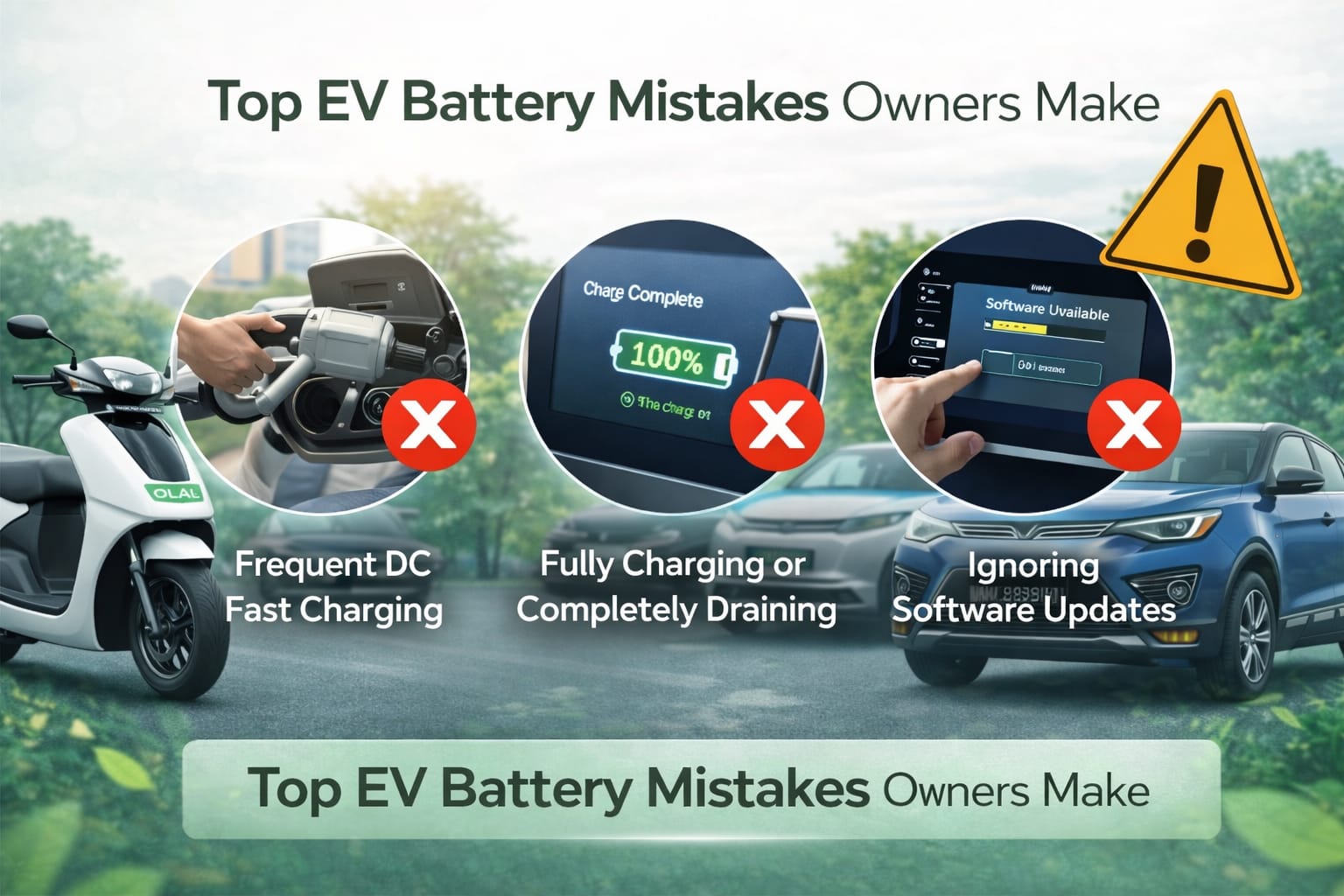
Electric vehicles are transforming the way India drives, offering cleaner, smarter, and more efficient mobility. However, as adoption grows, many owners unknowingly damage their batteries through everyday habits like improper charging and exposure to extreme temperatures.
This blog highlights practical mistakes and easy fixes to extend battery life. Whether you’re a new EV owner or planning to explore options on ev.sale, understanding these habits can help you make smarter decisions.
Why EV Battery Care Matters
Your EV battery is the most critical and expensive component of your vehicle. Proper care ensures longer driving range, consistent performance, reduced maintenance costs, and better resale value. A regular EV battery health check helps detect early signs of degradation and keeps your EV running efficiently over time.
Charging to 100% Too Often
Charging your EV to 100% every day might seem like a good idea, but it can actually wear down the battery over time. Lithium-ion batteries face more stress when kept at full charge, especially if you also rely on fast charging often. For everyday use, it’s better to keep your charge between 20% and 80% to maintain battery health. Charging to 100% is fine occasionally—like before a long trip—but it’s best not to make it a daily habit.
What You Should Do:
- Maintain battery levels between 20% and 80% for daily use
- Charge to 100% only for long trips
Following a structured EV charging guide helps build better long-term charging habits.
Letting the Battery Drop to 0%
Letting your EV battery drop all the way down to 0% might not seem like a big deal, but doing it often can actually put extra strain on the battery. Over time, this can reduce its efficiency and affect how well it holds a charge. For better performance and longer battery life, it’s a good idea to recharge before it goes below 20%. Keeping the battery at a moderate level helps maintain consistent range and overall health.
Best Practice:
- Recharge when the battery drops to 20–30%
- Avoid frequent full discharges
Pair this habit with a periodic EV battery health check to ensure optimal performance.
Overusing Fast Charging
Fast charging is super convenient, especially when you’re on a long trip, but it does generate more heat, which can put extra stress on the battery over time. This heat speeds up wear inside the lithium-ion cells, slowly affecting their efficiency and lifespan. Using fast charging once in a while is perfectly fine, but relying on it every day can lead to quicker battery degradation. For daily use, switching to slower AC charging is a better way to keep your battery healthy in the long run.
Important Tips:
- Use fast charging only when necessary
- After fast charging, avoid immediately charging to 100%
- Stick to the 20–80% range for regular use
A balanced EV charging guide approach can significantly reduce battery stress.
Exposure to Extreme Temperatures
Temperature plays a bigger role in EV battery health than most people realize. When it gets too hot—above 27°C—it speeds up chemical reactions inside the battery, which can lead to faster wear over time. In colder conditions, the battery faces more resistance, which can reduce efficiency and shorten your driving range. Keeping your EV in a moderate temperature environment can go a long way in maintaining its performance and lifespan.
What You Should Do:
- Park in shaded areas or covered spaces
- Avoid prolonged exposure to direct sunlight
- Precondition your EV while plugged in
Regular EV battery health check routines help monitor temperature-related impacts.
Incorrect Battery Levels During Long Parking
If you’re not using your EV for a few days or weeks, leaving it at a very high or very low charge level can actually put unnecessary strain on the battery. Lithium-ion batteries tend to stay healthiest when they’re kept somewhere in the middle, rather than at the extremes. This is something many owners overlook when parking their cars for longer periods. Ideally, keeping the charge between 40–60% during storage helps maintain battery health and performance.
Correct Approach:
- Maintain battery levels between 50% and 80%
- Avoid storing at full charge or near empty
- Keep the vehicle in a cool, dry place
This prevents voltage stress and energy drain caused by “vampire loss.”
Uncontrolled Overnight Charging
Overnight charging is definitely convenient, but doing it every day without setting limits can keep your battery sitting at a high charge for too long. This puts extra stress on lithium-ion cells and, over time, can lead to gradual wear. Many EV owners don’t fully use smart features like charge limits or scheduled charging. Setting a limit around 80% is a simple way to protect your battery and keep it healthier in the long run.
Smart Tips:
- Use scheduled charging options
- Set charging limits to 80%
This aligns well with a practical EV charging guide strategy.
Ignoring Battery Maintenance
Battery issues don’t usually show up all at once—they build up slowly and often go unnoticed until they become serious. Skipping regular health checks can lead to reduced range, slower performance, and unexpected problems down the line. Routine diagnostics help catch early signs of wear and keep the battery running efficiently. Staying proactive with maintenance can make a big difference in your EV’s lifespan and reliability.
What You Should Do:
- Schedule a regular EV battery health check
- Monitor changes in charging time and range
Improper Storage of Charging Equipment
Charging cables are an important part of your EV setup, but they’re often ignored in day-to-day use. Leaving them exposed to moisture, heat, or direct sunlight can damage the insulation and affect performance over time. This doesn’t just reduce charging efficiency—it can also create safety risks. Storing your cables in a dry, cool place helps keep them safe, durable, and working reliably.
Safety Guidelines:
- Store cables in dry, protected spaces
- Keep them away from water, fire, and extreme heat
- Use wall mounts or storage bags for better organization
Smart EV Ownership Starts Here sell ev cars online
Avoiding these common mistakes can really make a difference in how your EV performs over time. Simple habits—like charging within safe limits, avoiding extreme battery levels, storing your car properly, and checking battery health regularly—can go a long way in keeping things running smoothly.
When you’re a bit more mindful about how you charge and care for your EV, you not only protect the battery but also enjoy a more consistent range and reliable everyday driving experience. It’s all about small changes that add up in the long run.
If you’re thinking about buying or selling an EV, check out ev.sale—a trusted platform in India that makes the whole process easy and hassle-free.
Conclusion
Owning an EV is not just about driving—it’s about maintaining it intelligently. Small changes in daily habits can have a lasting impact on battery performance and longevity.
By following a reliable EV charging guide and staying consistent with battery care, you can ensure your EV remains efficient, sustainable, and future-ready.
How often should I do an EV battery health check?
Every 3–6 months is ideal to monitor battery performance, detect early degradation, and ensure your EV maintains optimal range and efficiency over time.
Is it okay to fast charge my EV daily?
No, frequent fast charging generates excess heat, which can accelerate battery wear; it’s best to use it only when necessary and rely on slow charging for daily use.
What is the ideal battery percentage for daily use?
Keeping your battery between 20% and 80% helps reduce stress on lithium-ion cells and significantly improves long-term battery lifespan.
Can extreme temperatures affect EV batteries?
Yes, high temperatures can speed up battery degradation, while cold conditions reduce efficiency and range, making temperature management very important.
How should I store my EV for long periods?
Keep the battery at 50–80% charge and park the vehicle in a cool, dry place to prevent voltage stress and avoid energy loss during inactivity.
Where can I buy trusted EV cars in Bangalore?
You can explore ev.sale, a reliable EV marketplace offering verified listings of electric cars in Bangalore. It helps you compare options easily and connect with genuine sellers for a smooth buying experience.
Best marketplace for EV cars in Bangalore
ev.sale is one of the best platforms to buy and sell EV cars in Bangalore, with a user-friendly interface and curated listings. It simplifies your search with trusted options and transparent details.
Where can I sell my EV car in Bangalore?
You can list your EV on ev.sale to reach serious buyers quickly in Bangalore. The platform makes selling easy with a streamlined process and strong visibility for your vehicle.
Leave a Reply